

Last Updated on 5 months ago by Grace Nyambura
| Quick Definition: A qualitative research interview is a structured or semi-structured conversation designed to explore how people understand and experience a particular phenomenon. It prioritises depth over breadth, meaning over measurement, and the participant’s own words over the researcher’s assumptions. It is one of the most widely used data collection methods in PhD research across the social sciences, education, health, and humanities. |
Qualitative research interviews are one of the most powerful tools available to PhD students. They allow you to explore lived experiences, meanings, and perspectives in a way that surveys and quantitative data simply cannot.
At the same time, conducting your first qualitative interview can feel overwhelming. Many doctoral students worry about asking the wrong questions, dealing with awkward silences, or collecting data that ends up being unusable.
This guide walks you through how to conduct a qualitative research interview step by step, in a practical, realistic way. Whether you are preparing for your first interview or refining your technique, you will find actionable guidance here. If you are still deciding whether qualitative research is the right approach for your study, start with our overview of the core characteristics of qualitative research.
What Is a Qualitative Research Interview
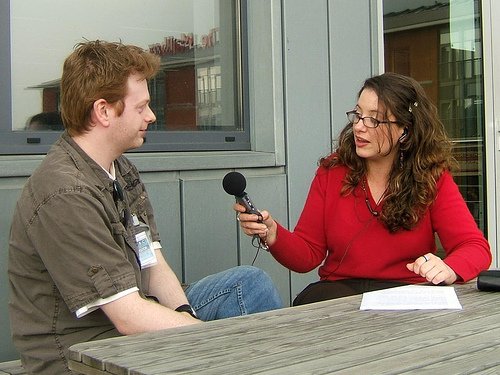
A qualitative research interview is a guided conversation between a researcher and one or more participants, designed to generate rich, in-depth data about a specific topic or phenomenon. Unlike closed-ended surveys that produce yes/no answers or rating scales, qualitative interviews give participants space to explain, reflect, and elaborate in their own words.
Qualitative interviews focus on three core principles: depth rather than breadth, meaning rather than measurement, and the participant’s voice rather than the researcher’s categories. This makes them particularly valuable for exploratory studies where the goal is to understand how and why, not just what or how many.
For a broader overview of qualitative data collection methods and how interviews compare to other approaches, Scribbr’s guide to qualitative interviews provides a clear and well-referenced starting point.
Types of Qualitative Research Interviews
Before planning your interview, you need to decide which type fits your research design:
- Structured interviews — all participants are asked exactly the same questions in the same order. Less common in qualitative research because they limit flexibility.
- Semi-structured interviews — you have a prepared interview guide with core questions, but you can probe further, change the order, and follow unexpected threads. This is the most common format in PhD qualitative research.
- Unstructured interviews — more like a guided conversation with a broad topic and minimal pre-set questions. Used in ethnographic or exploratory research where the researcher wants to minimise imposing structure.
For most PhD students, semi-structured interviews offer the right balance of consistency and flexibility. They allow comparison across participants while still capturing individual nuance.
How to Conduct a Qualitative Research Interview: 7 Steps
Step 1 — Plan and Prepare Thoroughly
Most problems in qualitative interviews begin before the interview takes place. Careful planning is essential.
Clarify your research question. Before writing a single interview question, be clear about what you are trying to understand. Every question in your guide should connect directly to your research objectives. A useful test: can you explain how each question will help you answer your main research question? If not, revise it.
Know your participants. Think carefully about who you need to interview, why their experiences are relevant, and what background knowledge they may or may not have. This shapes your question wording and helps you avoid unnecessary jargon.
Consider purposive sampling. Qualitative research does not use random sampling. You select participants who have direct experience of the phenomenon you are studying. Be ready to justify your selection criteria in your methodology chapter.
Plan the logistics. Decide where the interview will take place — in person or online. Determine how long it will last (45 to 90 minutes is typical for PhD interviews). Decide how you will record it and test your equipment in advance. Always have a backup recording method.
Step 2 — Address Ethical Requirements
Ethics are not just bureaucratic requirements — they shape the quality of your data and the safety of your participants.
Informed consent. Participants must clearly understand the purpose of the study, what participation involves, how their data will be used, and that they can withdraw at any time without consequence. Consent must be documented — written or recorded.
Confidentiality and anonymity. Explain how you will protect participants’ identities, store recordings and transcripts securely, and remove or change identifying details during analysis and writing. When participants feel safe, they share more openly — and that directly improves your data quality.
Sensitive topics. If your research involves potentially distressing topics — trauma, discrimination, illness — have a plan for how to respond if a participant becomes upset. Know what support or referral resources are available.
For more on research ethics standards in qualitative work, Simply Psychology’s qualitative research methods guide covers key principles in accessible language.
Step 3 — Build Rapport with Participants
Rapport is one of the most important and least taught elements of qualitative interviewing. If participants do not feel comfortable, the data will be shallow.
Start human, not academic. Begin with light, natural conversation. Thank participants for their time, explain how the interview will work, and remind them there are no right or wrong answers. Avoid jumping straight into complex or sensitive questions.
Stay genuinely curious. The best interviewers are not performing curiosity — they are actually interested in what the participant is saying. That authenticity comes through and encourages openness.
Practice active listening. During the interview, maintain eye contact (or camera presence in online interviews), nod and use brief verbal affirmations like “I see” or “go on,” and avoid interrupting. Silence is not a problem — it often signals that the participant is thinking. Wait.

Step 4 — Craft Strong Interview Questions
Good qualitative interviews depend on good questions. Poor questions produce thin, unusable data.
Use open-ended questions. Avoid yes/no questions. Instead, ask questions that invite storytelling, reflection, and explanation. Rather than “Did you find the program useful?” ask “Can you describe your experience with the program?”
Avoid leading questions. Questions must not suggest a preferred answer or reveal your assumptions. Neutral wording ensures responses reflect the participant’s perspective, not yours.
Use probing questions. Probes deepen the conversation and often produce your richest data: “Can you tell me more about that?”, “What do you mean by that?”, “Can you give me an example?”, “How did that make you feel?” Build these into your guide as optional follow-ups, not scripted requirements.
Sequence your questions carefully. Move from broader, easier questions at the start to more specific or sensitive ones in the middle. End with reflective or summary questions that give the participant a sense of closure.
Step 5 — Conduct the Interview
Once the interview begins, your role is to guide the conversation while remaining genuinely flexible.
Follow the guide, but stay open. An interview guide provides structure, but qualitative interviews are not scripts. If a participant introduces an unexpected but relevant topic, explore it. Some of the most valuable insights emerge from unplanned moments.
Manage time and focus. Participants may occasionally drift off-topic. Gently guide the conversation back by connecting something they said to a question you still need to cover. Toward the end, always ask: “Is there anything else you would like to add that I did not ask about?” This question frequently reveals important insights that would otherwise go uncaptured.
Pay attention to what is not said. Hesitations, changes in tone, and topics a participant avoids can be as analytically significant as what they do say. Note these observations in your field notes immediately after the interview.
Step 6 — Record and Transcribe Accurately
Recording interviews ensures accuracy and allows you to be fully present during the conversation rather than frantically taking notes.
Get consent to record. Always confirm recording consent before starting, even if it was included in your written consent form. Some participants change their minds.
Transcription is analysis. Transcribing interviews is time-consuming, but it is not just an administrative step — it is an early stage of qualitative analysis. Listening again helps you notice patterns, emotions, and emphases that were not obvious in the moment. Always check transcripts against the audio to ensure accuracy.

Once your transcripts are ready, the next stage is coding and thematic development. Our guide to qualitative coding of interviews with NVivo walks you through the exact process step by step.
Step 7 — Begin Preliminary Analysis
Before formal coding begins, conduct a first thorough reading of each transcript.
Write analytic memos. After each interview, write a short memo capturing your initial observations, emerging patterns, surprising statements, and any follow-up questions for future interviews. These memos are invaluable during later analysis.
Look for patterns and contradictions. In your first read-through, pay attention to repeated ideas or themes, strong emotional responses, and surprising or contradictory statements. Note anything that strikes you as significant, even if you cannot yet explain why.
Refine future interviews. If you are collecting data iteratively — common in qualitative research — use insights from early interviews to refine your guide for later ones. This is a legitimate and expected part of emergent qualitative design.
When you are ready to move into systematic coding and thematic analysis, our post on inductive thematic analysis using NVivo covers that full process.
Common Mistakes PhD Students Make in Qualitative Interviews
Even well-prepared researchers make avoidable mistakes. Here are the most common ones I see in doctoral qualitative work:
- Asking too many questions. A good interview guide has 8 to 12 core questions, not 25. Too many questions lead to rushed, shallow answers. Fewer, deeper questions produce better data.
- Filling silence immediately. When participants pause, many researchers jump in with the next question. Silence often means the participant is still thinking. Wait at least five seconds before prompting.
- Leading the participant. Questions like “Don’t you think that…?” or “Would you agree that…?” suggest the answer you want. Always use neutral wording and check your guide for implicit bias before starting fieldwork.
- Ignoring rapport-building. Starting straight with substantive questions produces thin data. A few minutes of genuine, casual conversation before the official interview dramatically improves participant openness.
- Not writing field notes. The observations you make immediately after an interview — body language, atmosphere, what was not said — are not captured in the recording. Write field notes within 30 minutes while memory is fresh.
For a deeper discussion of qualitative research methodology and design, Grad Coach’s qualitative research resources offer practical, PhD-level guidance on the decisions researchers face at every stage.
Frequently Asked Questions
How many interviews do I need for a qualitative study?
There is no universal answer. Most PhD qualitative studies use between 8 and 30 interviews, with the guiding principle being data saturation — the point at which additional interviews are producing no new themes or insights. Your methodology chapter should justify your sample size in relation to your research question and design.
How long should a qualitative research interview be?
For most PhD research, 45 to 90 minutes is the standard range. Shorter interviews risk producing shallow data. Longer interviews can exhaust participants and produce data that is difficult to manage. Pilot your guide with a friendly participant first to check timing.
Can I conduct qualitative interviews online?
Yes, and online interviews via Zoom, Teams, or similar platforms are now widely accepted in PhD research. They expand your geographic reach, are easier to record with participant consent, and can be transcribed automatically with tools like Otter.ai. The main limitation is the reduced ability to read body language.
What is the difference between structured and semi-structured interviews?
Structured interviews follow a fixed script with identical questions for all participants. Semi-structured interviews use a guide with core questions but allow the researcher to probe further, reorder questions, and follow unexpected threads. Semi-structured interviews are standard in most PhD qualitative research because they balance consistency with flexibility.
How do I analyse interview data after collecting it?
The most common approach is thematic analysis — transcribing your interviews, coding the transcripts for meaningful units of data, and then grouping codes into themes that address your research questions. Software tools like NVivo, MAXQDA, and ATLAS.ti support this process. See our full guide to inductive thematic analysis using NVivo (Saldana Method) for a step-by-step walkthrough.
Key Takeaways
Conducting a strong qualitative research interview comes down to seven things: thorough planning, ethical rigour, genuine rapport, well-designed questions, flexible facilitation, accurate transcription, and early analytical engagement with your data.
No interview is perfect, particularly your first. But every interview you conduct builds skill. The researchers who produce the richest qualitative data are not naturally gifted conversationalists — they are prepared, curious, and willing to reflect on what each interview taught them.
Ready to Analyse Your Interview Data?
Are you overwhelmed by your qualitative data? I offer two specialized services for PhD students who need support with N-Vivo analysis. The first is my done-for-you qualitative data analysis service, where I handle the full coding, theme development, data visualization, and a findings report — including a walk-through recording of the entire analysis. The second is one-on-one N-Vivo consulting, where we work together on a video call via Zoom or Microsoft Teams, and I guide you through your analysis step by step.

Pingback: How to Do Thematic Analysis in NVivo 15 [Step-by-Step] -