There are many different approaches that we can use to conduct thematic analysis.
However, conducting inductive thematic analysis is one of the most popular approaches to analyzing qualitative data.

There are two common approaches of doing inductive thematic analysis, which include the Braun and Clarke six-step framework.
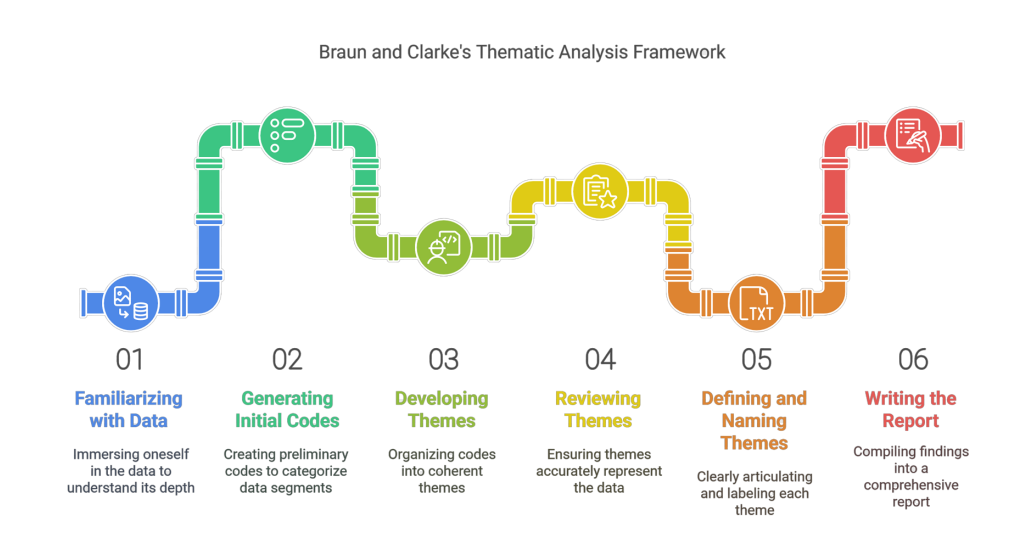
And the Saldana’s approach.
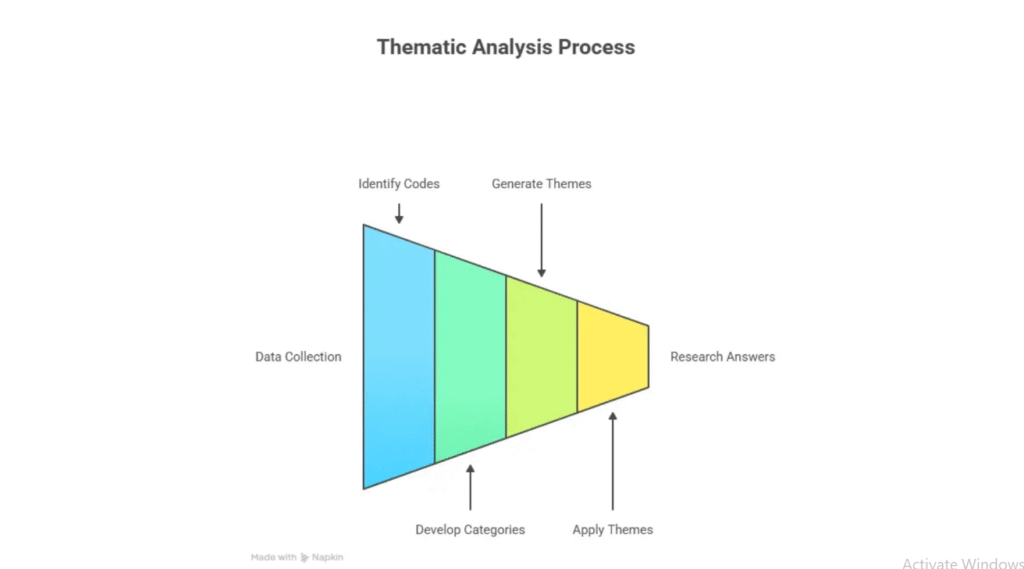
In this article, we are going to look at how to conduct thematic analysis according to Saldana.
My name is Bernard Mugo. I like to refer to myself simply as an academic.

In the past three years, I’ve helped more than 300 PhD students analyze qualitative data and finally complete their thesis or dissertations.
In the course of helping such a large number of students, I’ve gained invaluable experience in the best practices that you can use to perform qualitative analysis of your interviews and be able to retrieve quality findings.

Now let’s look at thematic analysis process, according to Joe Saldana, and let’s see the steps that this scholar suggests.
According to Joe Saldana, thematic analysis process has four main steps.
The first step is identifying and categorizing codes.
This involves going through the data to identify and label key ideas, which are called codes.
The second step is developing high level categories.
In this step, we group the initial codes into broader categories and develop themes into high level categories.
The third step is generating themes through analytic memoing.
In this step, we synthesize categories to create themes by writing analytic memos to reflect on the data and refine the themes.
The fourth step is applying themes to research questions.
In this step, we use the developed themes to answer the original research questions.
Now we are going to go ahead and conduct these steps.
Before we go to ATLAS.ti and start conducting the steps that were proposed by saldana of doing thematic analysis, let me first look at examples of some codes.
I want to read this paragraph, then see examples of codes, and then provide a definition of what codes are.
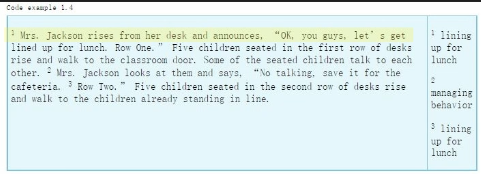
Mrs.Jackson rises from our desk and announces, okay, you guys desk get lined up for lunch, row one, five children sited in the first row of desks.
Rise and walk through the classroom door. Some of the seated children talk to each other. Mrs. Jackson looks at them and says, no talking, save it for the cafeteria.
Row two, five children sited in the second row of desk rise and walked to the children already standing in line.
So in this excerpt we have three codes
- lining up for lunch
- managing behavior
- lining up for lunch.
The first sentence, which is Ms jackson, rises from our desk and announces. Okay you guys, let’s get lined up for lunch. Row one, five children seated in the first row of desks rise and walk to the classroom door. Some of the seated children talk to each other.
The code for that is lining up for lunch.
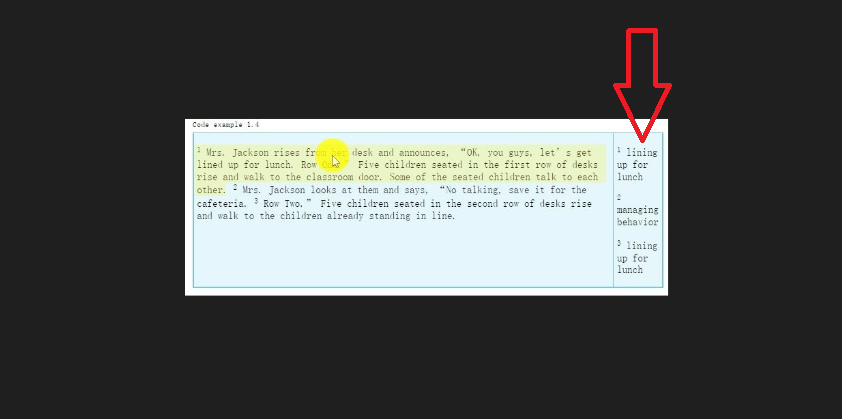
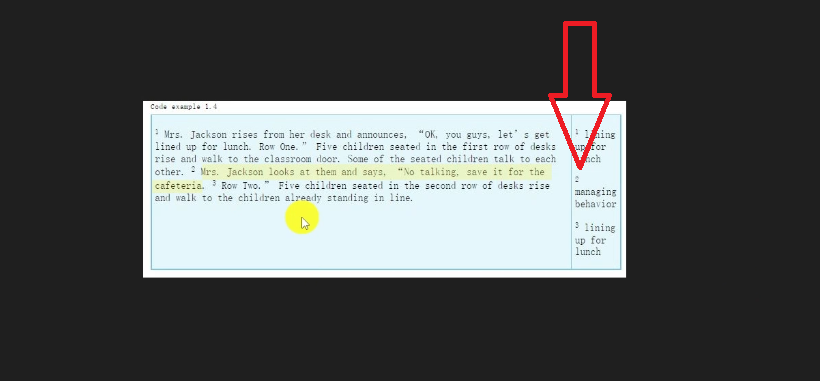
For the second statement, Ms.Jackson looks at them and says, no talking, save it for the cafeteria.
For the second sentence,the code is managing behavior.
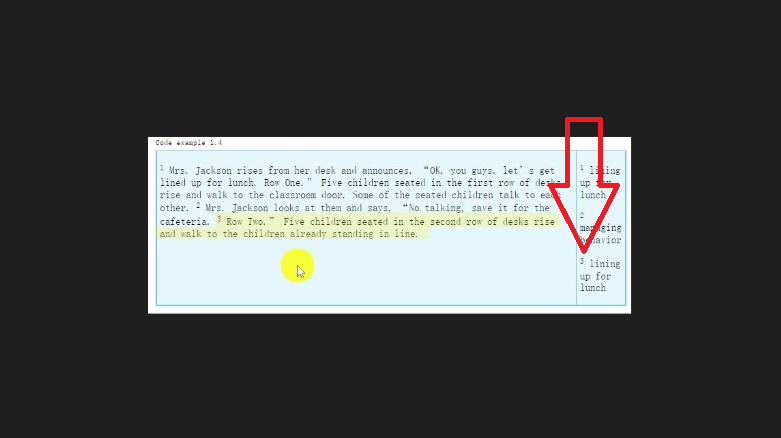
The third sentence is, row two, five children seated in the second row of the desk rise and walk to the children already standing in line.
For the third row, the code is lining up for lunch.
Those are the three code.
Definition of a code
With this in mind, we can say that a code is a label or an interpretive statement to any information that is important to our research questions.

We can now go and conduct the Saldana’s approach to thematic analysis in ATLAS.ti.
So here I have ATLAS.ti.
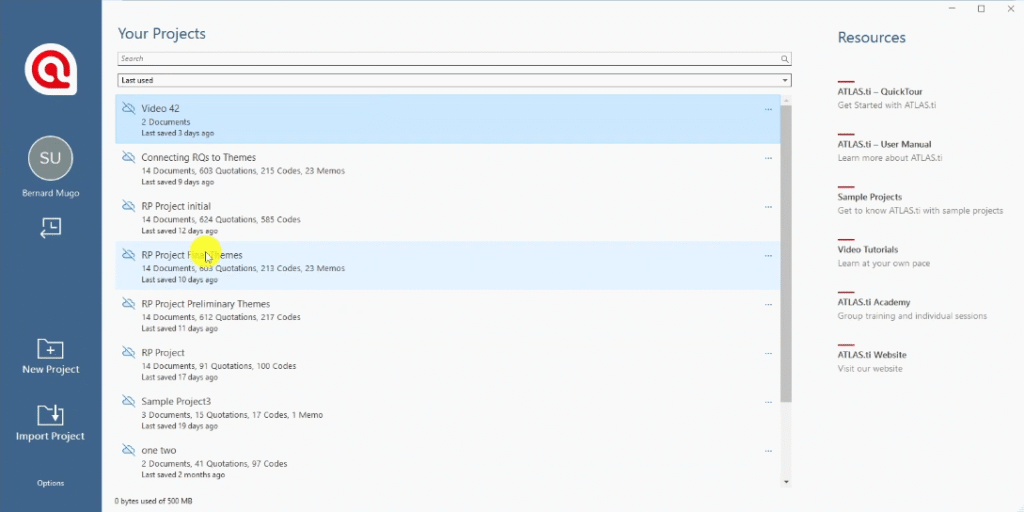
I go to new project and call this project Saldana approach.
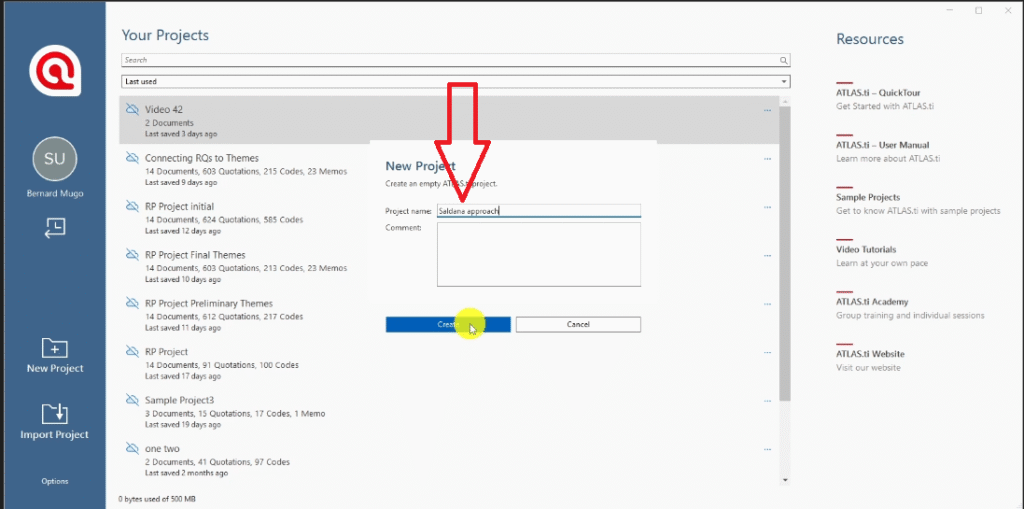
Then click on create.
Then in the documents section I want to drag and drop the two transcripts we are going to analyze through the Saldana’s approach.
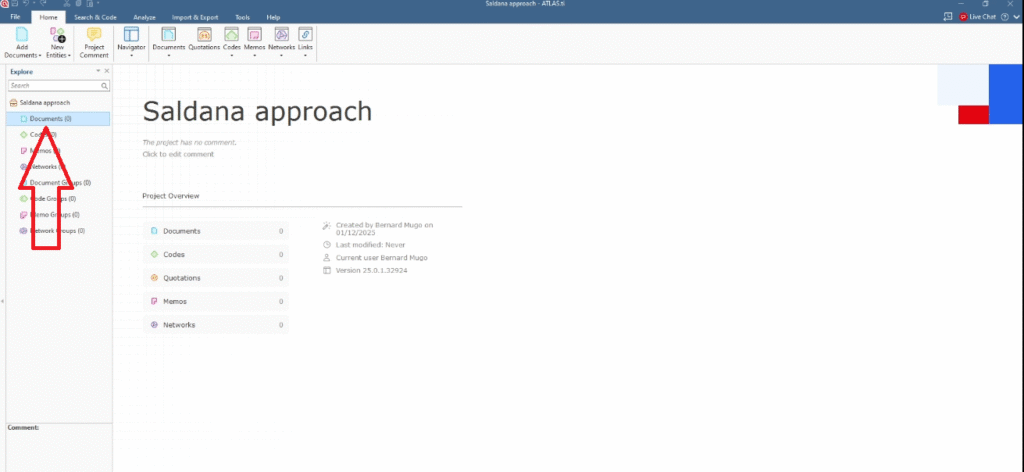
So I drag and drop the two transcripts inside the document section.
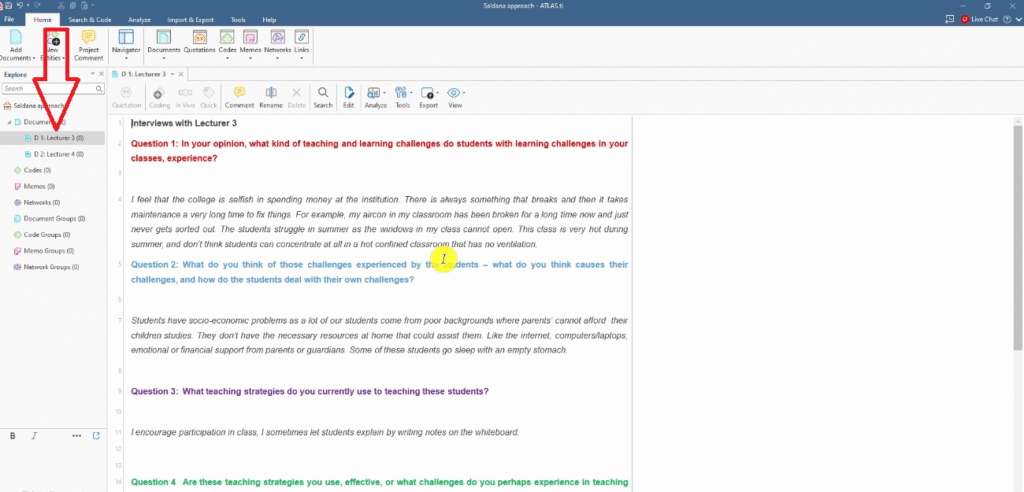
For one of the documents, I had used color codes to identify the questions, the color codes are going to guide us on how to classify the codes.
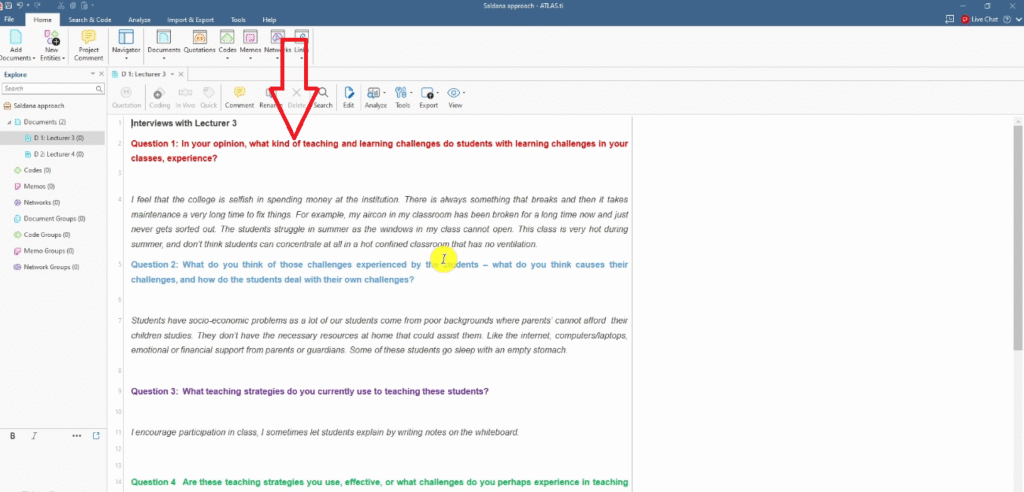
Identifying and categorizing codes
So the first step of the Saldana’s approach of doing thematic analysis is Identifying and categorizing codes.
We are going to go through these two transcripts, identify the codes in them, and categorize them or use color codes to mark them.
So let’s do that together.
Question one, In your opinion, what kind of teaching and learning challenges do students with learning challenges in your classes experience.
So what teaching challenges does this person see?
I feel that the college is selfish in spending money at the institution. There is always something that breaks and then it takes maintenance a very long time to fix things. For example, my aircon in my classroom has been broken for a long time now and just never gets sorted out. The students struggle in summer as the windows in my class cannot open. This class is very hot during summer, and don’t think students can concentrate at all in a hot confined classroom that has no ventilation.
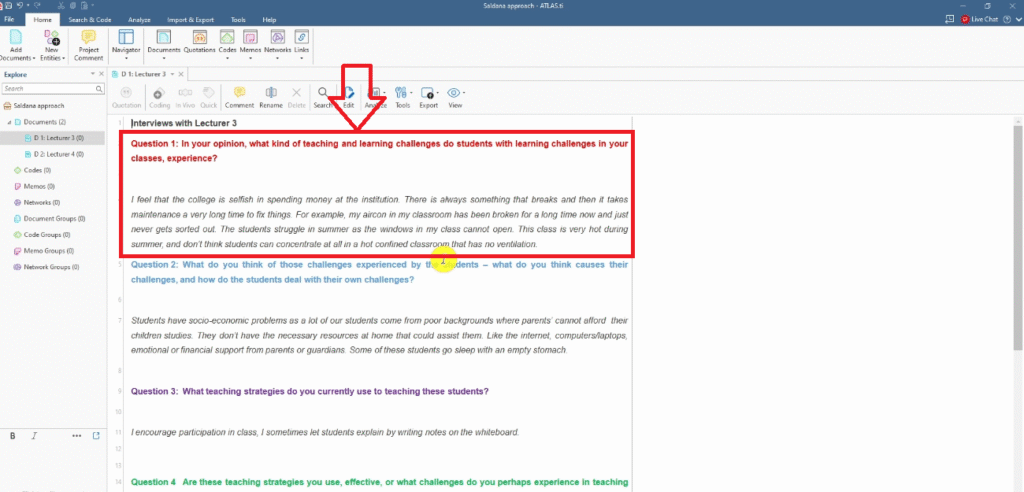
So in your opinion, what kind of teaching and learning challenges do students within your classes experience?
I want to say here that they are infrastructural challenges, like the air con is broken.
For this I just want to show that there is always something that breaks when the class is hot during summer.
One of the challenges is broken infrastructure, or infrastructure challenges.
So I right click.
I select apply codes.
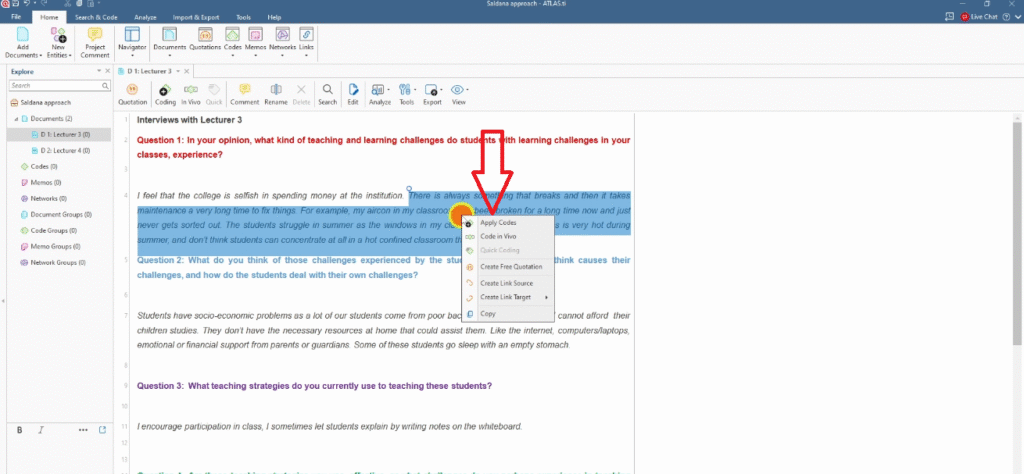
And then code this section as Infrastructural challenges.
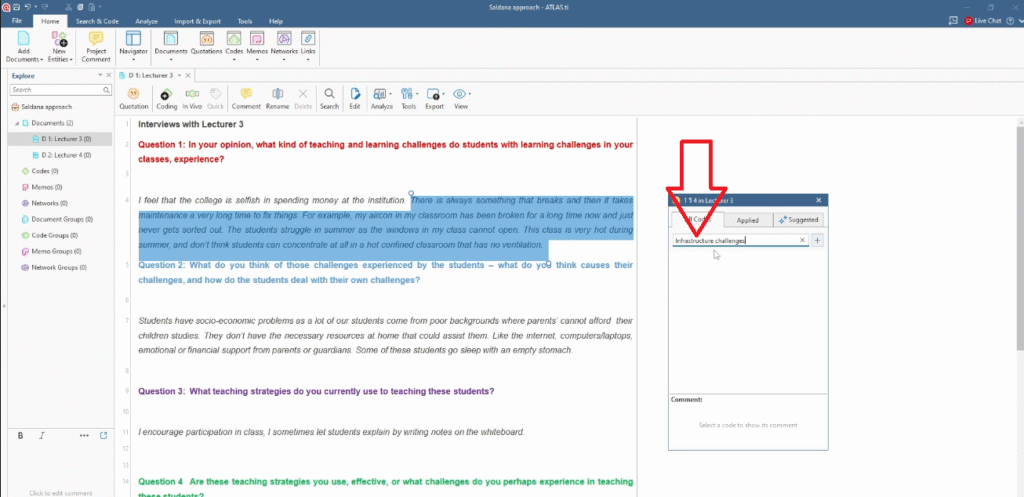
Add that code.
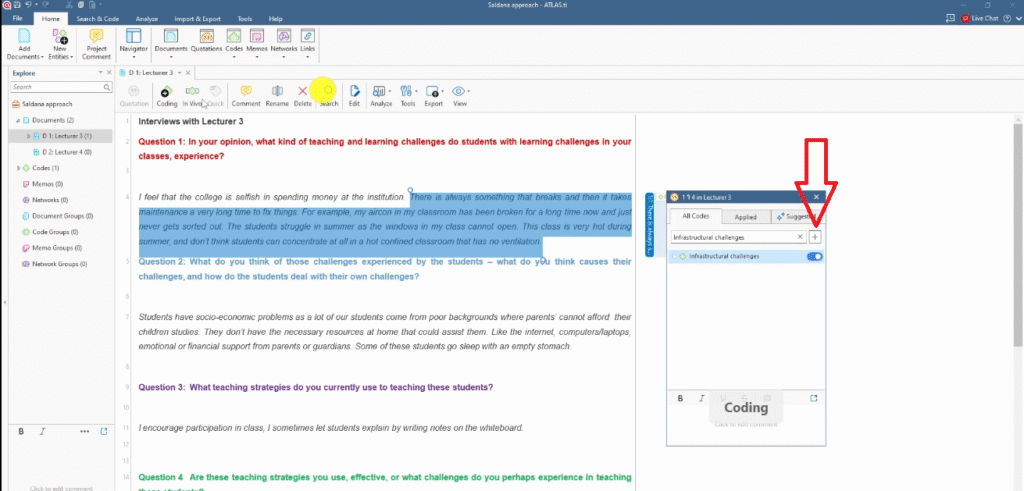
That code will be assigned directly in the codes section.
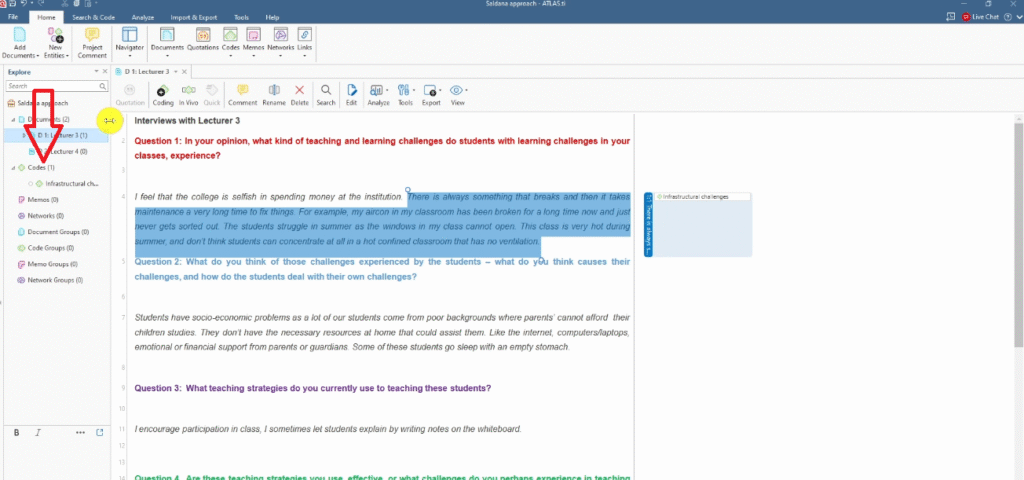
We can right click on that code.
Go to change color and assign this code color red.
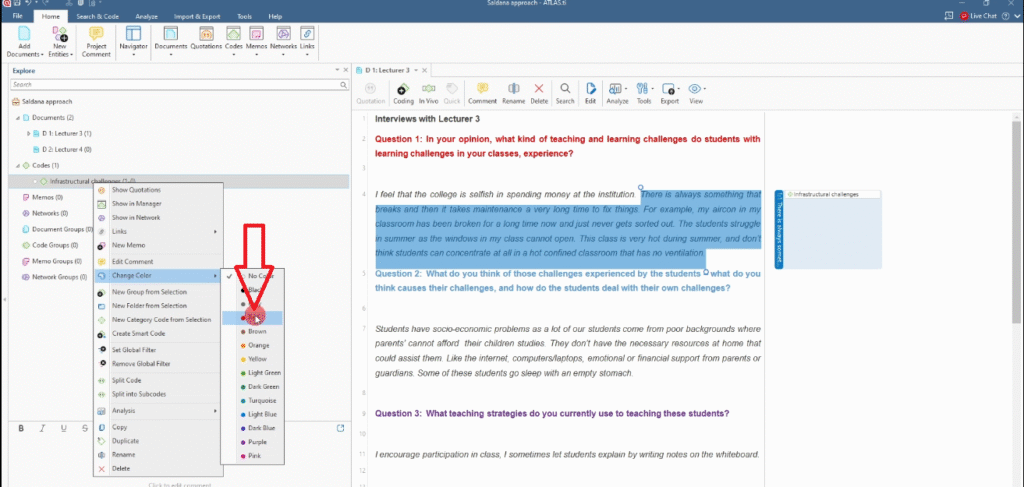
I am marking in-order to know that the code came from the first question, let’s keep going.
What do you think are those challenges experienced by students, what do you think causes their challenges and how the students deal with their own challenges?
Students have socio-economic problems as a lot of our students come from poor backgrounds where parents’ cannot afford their children studies. They don’t have the necessary resources at home that could assist them. Like the internet, computers/laptops, emotional or financial support from parents or guardians. Some of these students go sleep with an empty stomach.
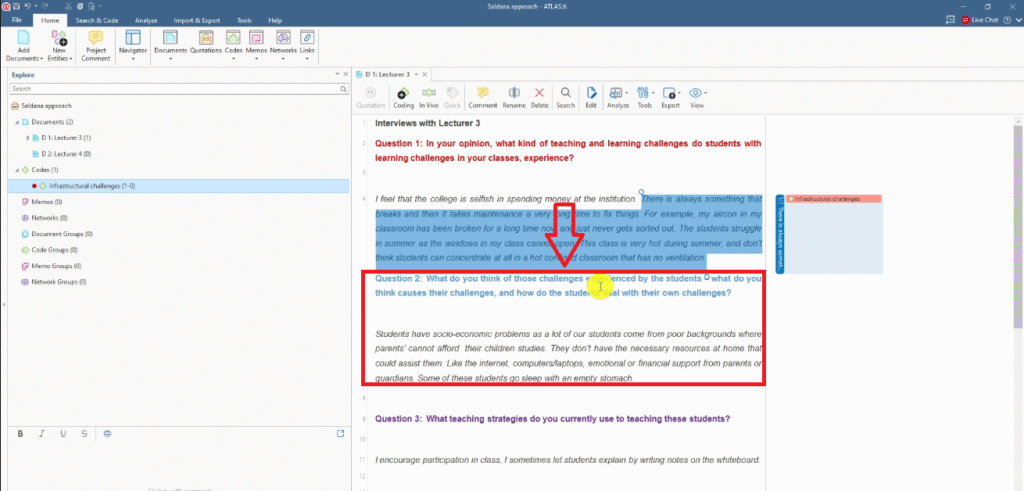
So the challenges that students experience are socioeconomic challenges.
That is just one code on question 2.
We could code more here, but because it’s just a sample article, we can leave it there.
So apply codes.
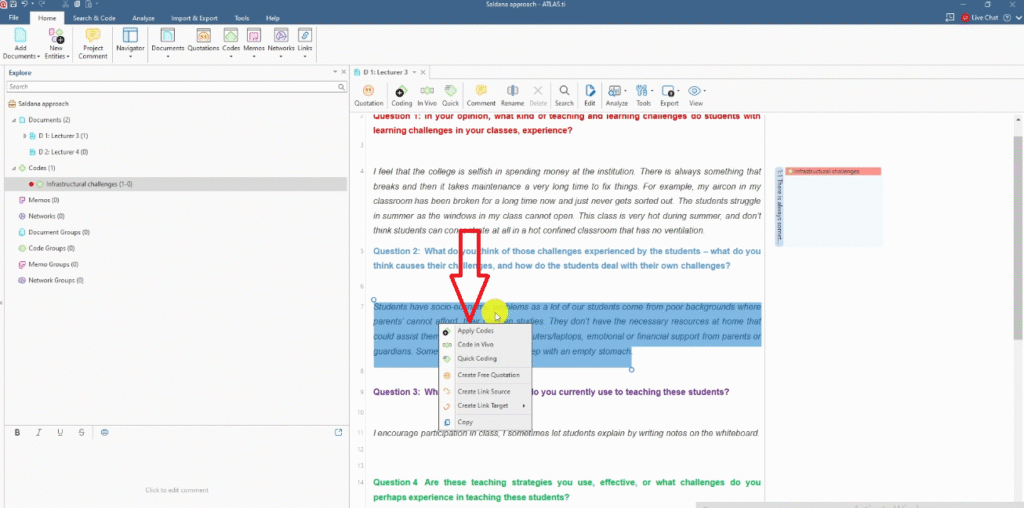
Let us say socioeconomic challenges.
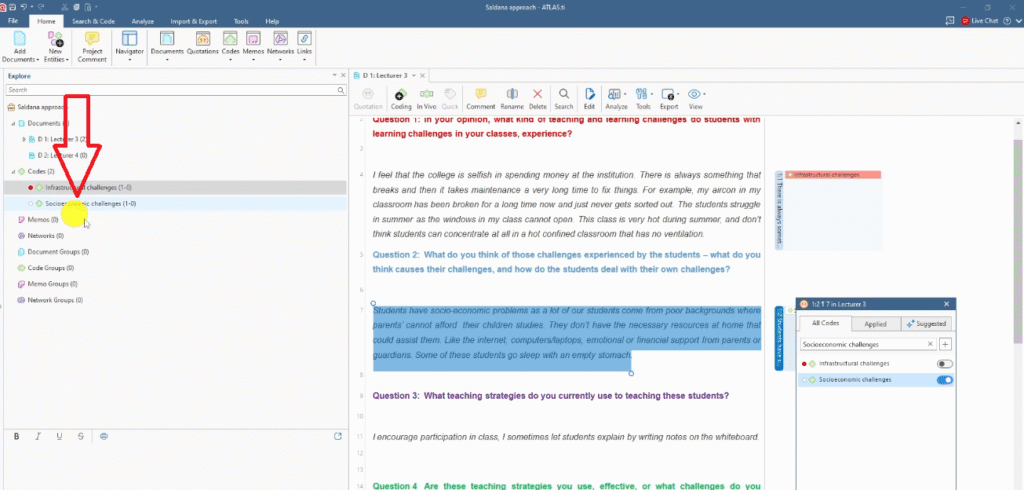
Click the plus sign.
Then for this code mark it as light blue.
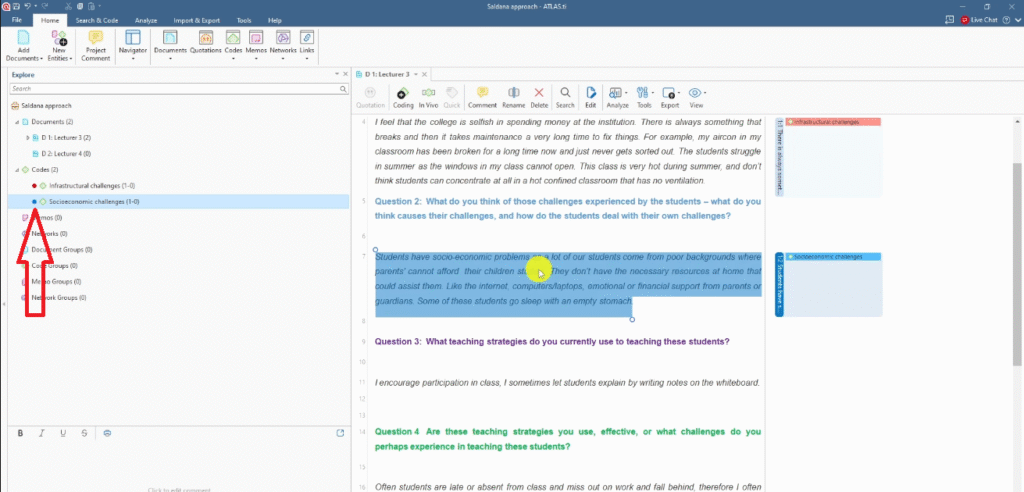
Let’s keep going.
What teaching strategies do you currently use to teaching these students?
I encourage participation in class, I sometimes let students explain by writing notes on the whiteboard.
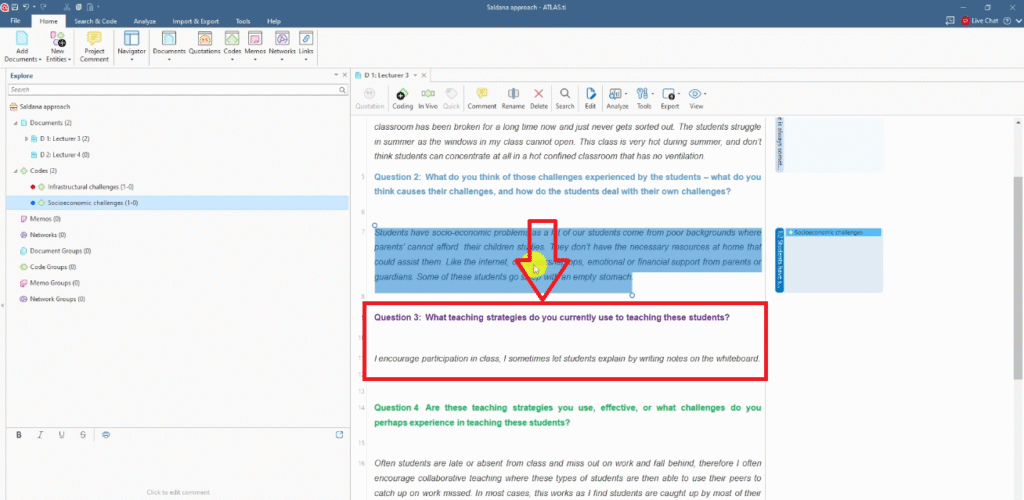
So active participation of students in class.
I click apply codes.
Then code active participation of students in class.
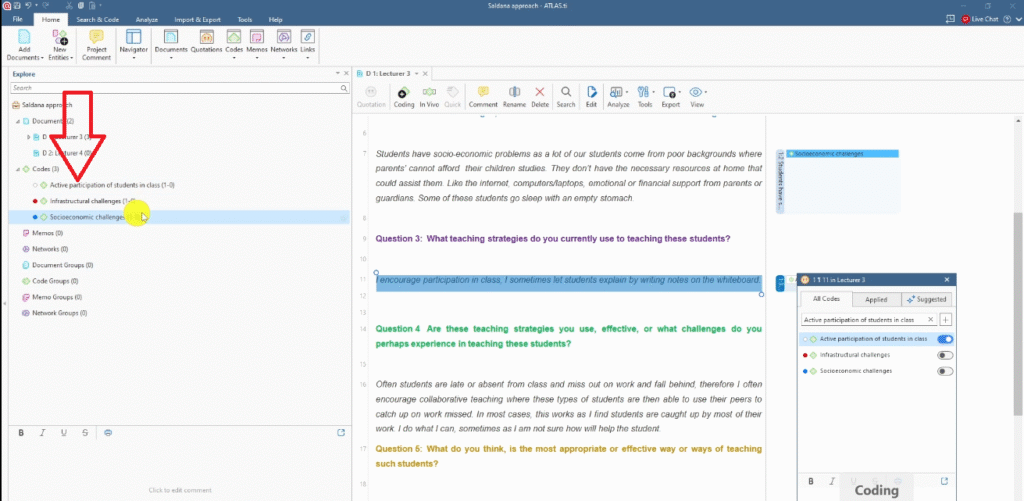
Click on the plus sign.
What is the color code for this code?
This one will be purple.
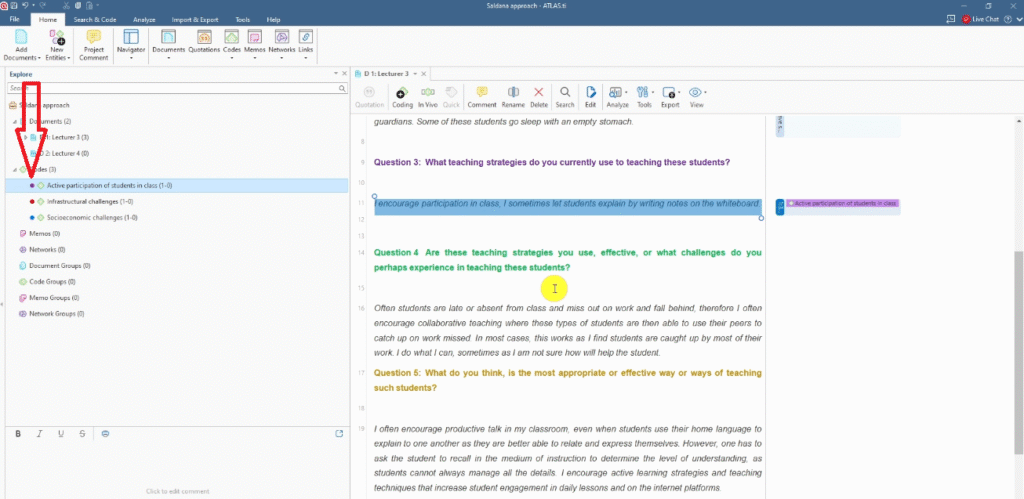
Let us keep going remember this is the first step of Saldana, which is coding and categorizing codes.
Are these teaching strategies you use, effective, or what challenges do you perhaps experience in teaching these students?
Often students are late or absent from class and miss out on work and fall behind, therefore I often encourage collaborative teaching where these types of students are then able to use their peers to catch up on work missed. In most cases, this works as I find students are caught up by most of their work. I do what I can, sometimes as I am not sure how will help the student.
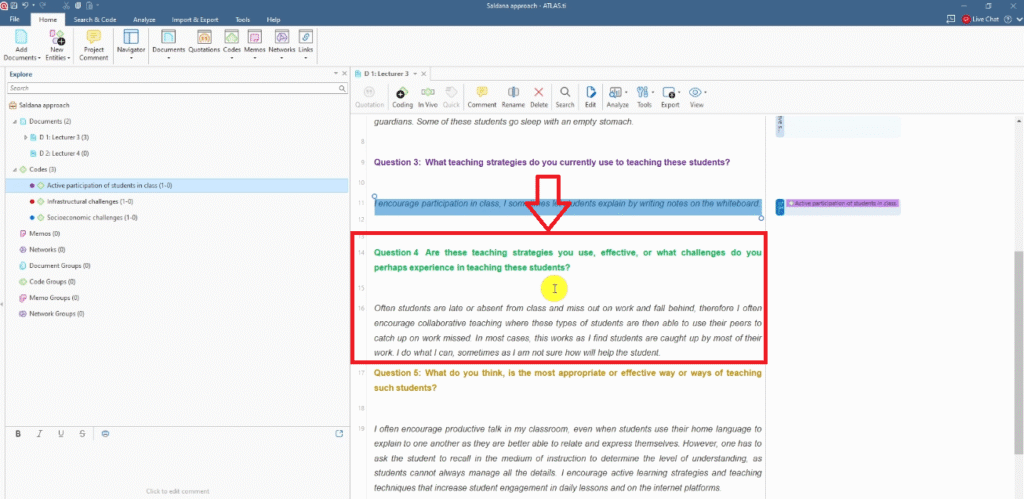
So are their teaching strategies effective?
And also the challenges of teaching these students.
I want to start with the second part of this question, so one of the challenges is highlight here.
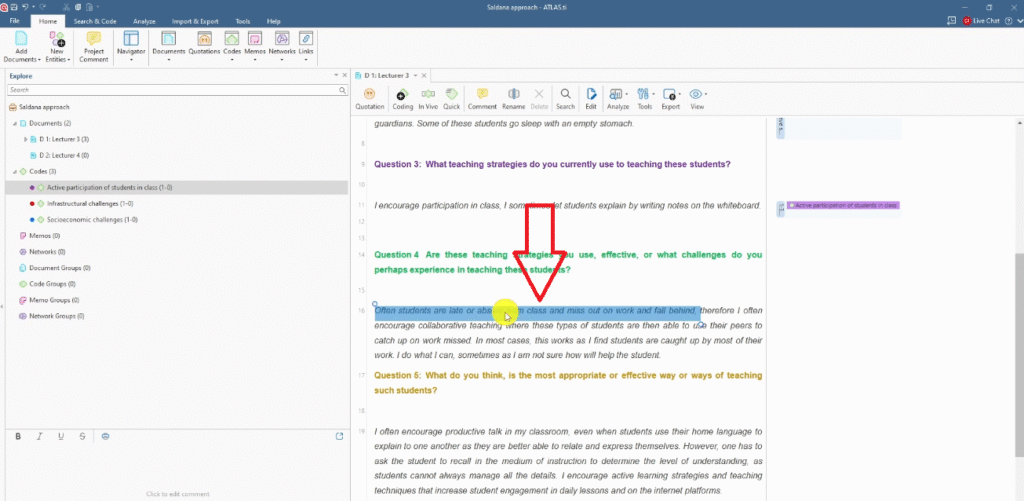
Apply codes.
One of the challenges is high levels of absenteeism among the students.
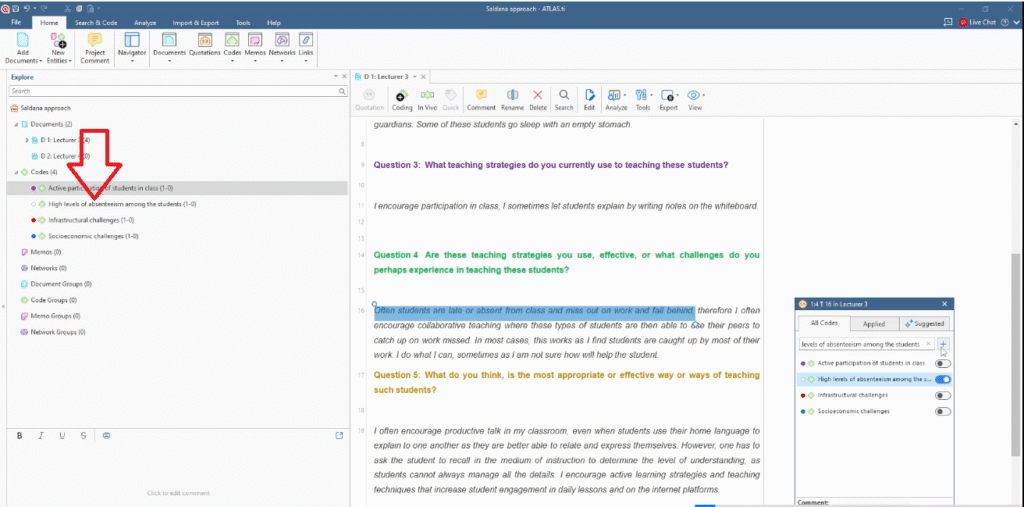
Then click on the plus sign.
Remember this is a green code.
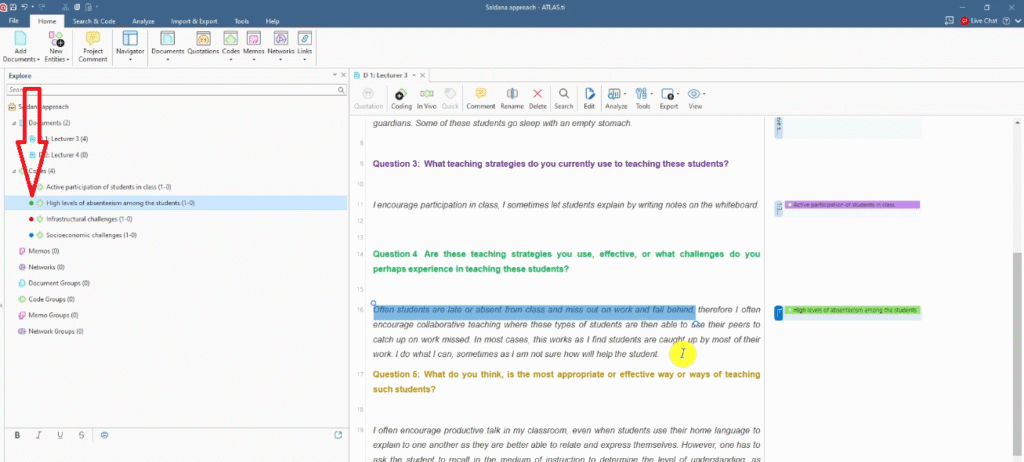
So that is a challenge in teaching the students.
But I also want to highlight this section.
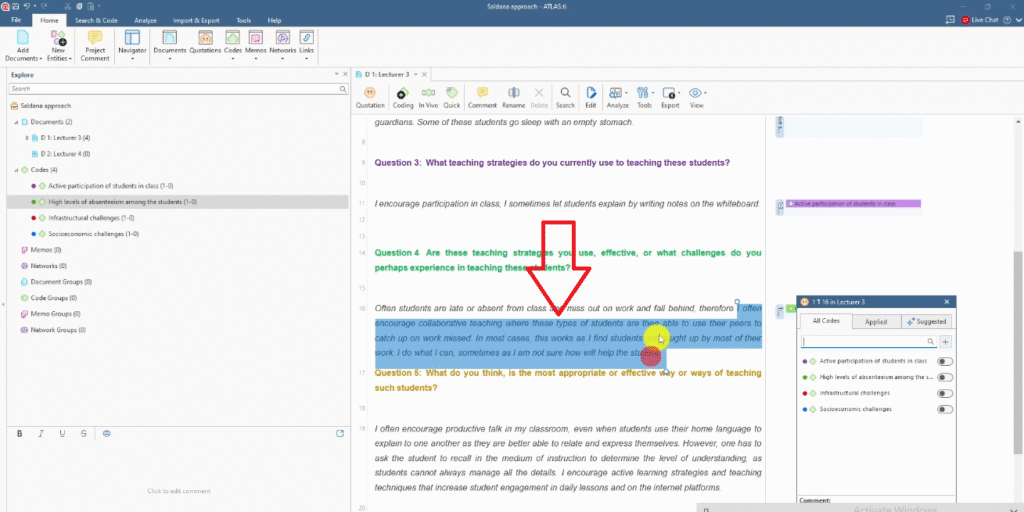
I often encourage collaborative teaching where students use their peers to catch up.
Apply codes.
And code Collaborative peer teaching.
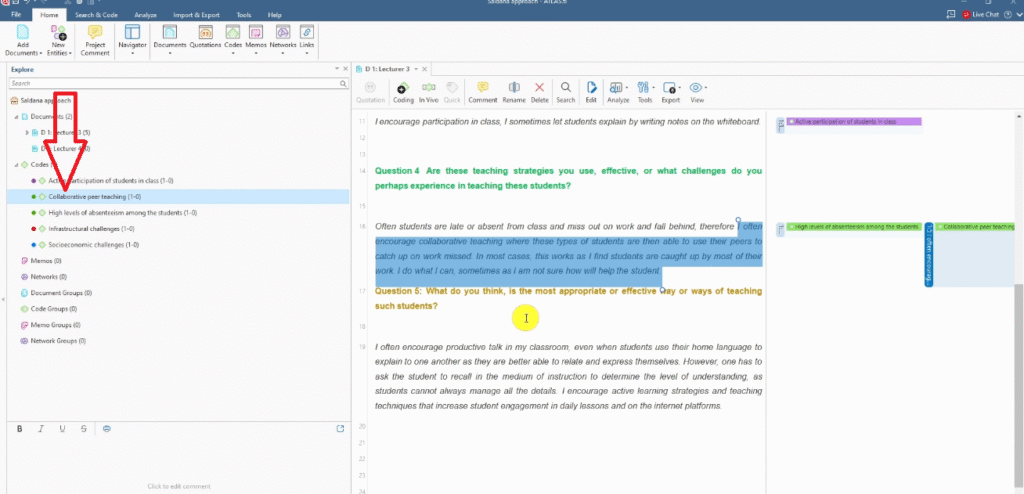
That code came from the same question so we also mark it as green.
Let’s read the final question and generate some codes.
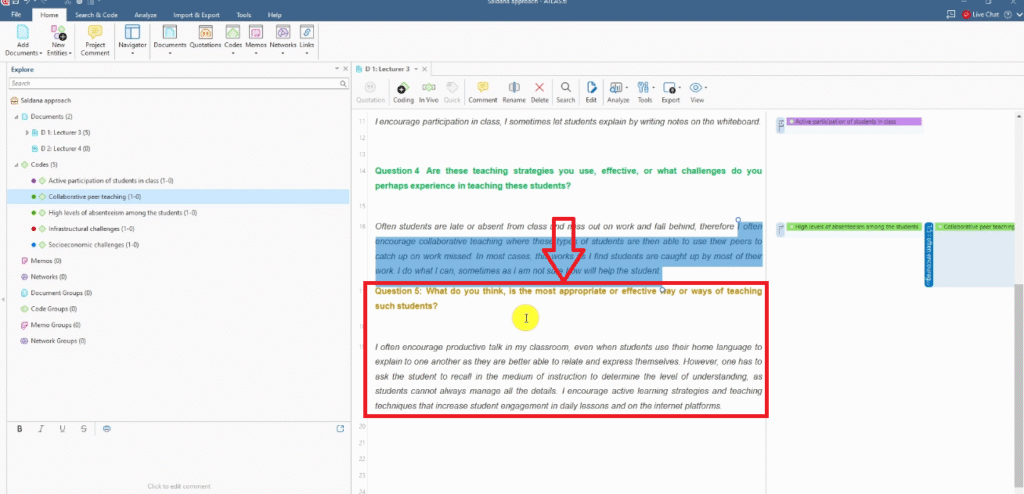
What do you think is the most appropriate or effective way or ways of teaching students?
I often encourage productive talk in my classroom, even when students use their home language to explain to one another as they are better able to relate and express themselves. However, one has to ask the student to recall in the medium of instruction to determine the level of understanding, as students cannot always manage all the details. I encourage active learning strategies and teaching techniques that increase student engagement in daily lessons and on the internet platforms.
Encouraging active participation of students in class can can be my first code.
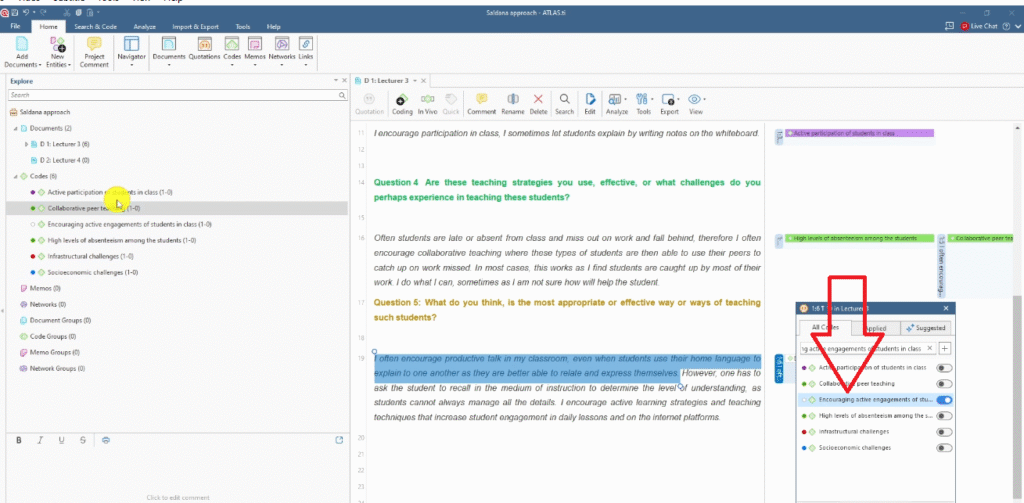
Click on the plus sign to add the code.
This can be another code, promotes active learning among students.
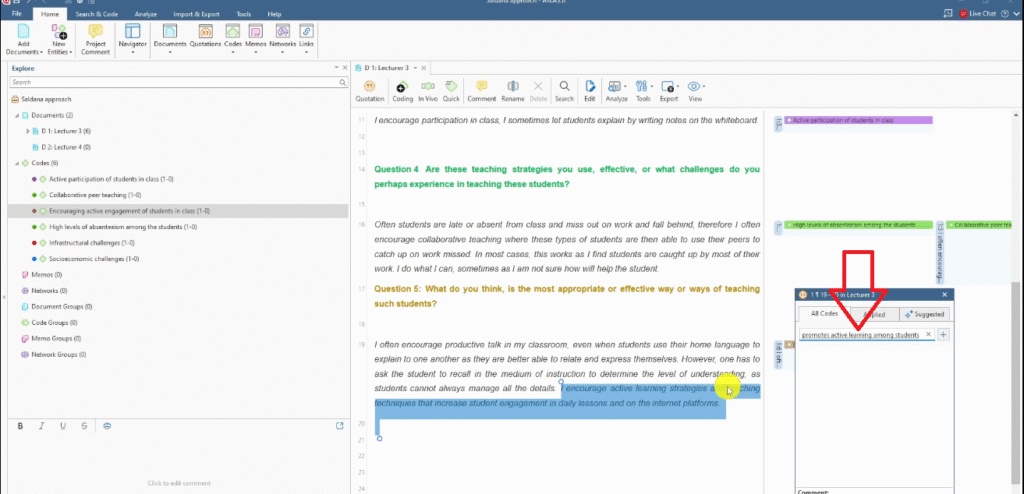
So those are the first batch of codes that I got from lecturer 3.
Let’s go to the second transcript, code, and categorize the codes, which is the first step of Saldana’s approach to doing thematic analysis.
We are going to have to recall the color codes.
For example the first question, the color code is red.
So let’s read the first question.
In your opinion, what kind of teaching and learning challenges do students with learning challenges in your class experience?
I have been complaining about the windows in my classroom that does not open. I think a few years ago this matter was addressed in a staff meeting but nothing was ever done about it. Students is unable to work in condition like this. There is no ventilation in the classroom and I am pretty sure that this problem is common amongst most of the staff members here. I have addressed this with management a number of times but I don’t think they care, because nothing gets done about it. I don’t blame students for complaining or wanting to cut classes short.
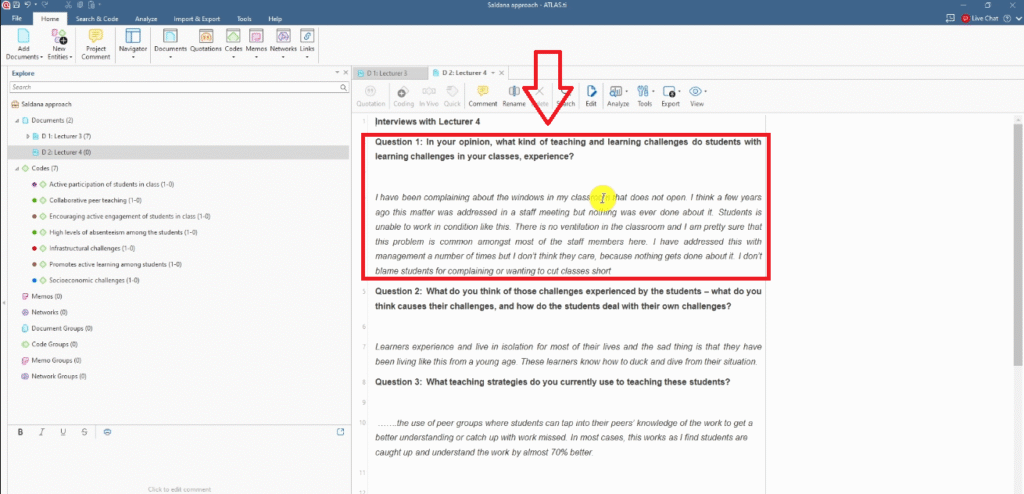
So what is she saying here?. Windows that do not open, poor ventilation.
If you remember, we had a code called infrastructure challenges in the previous transcript.
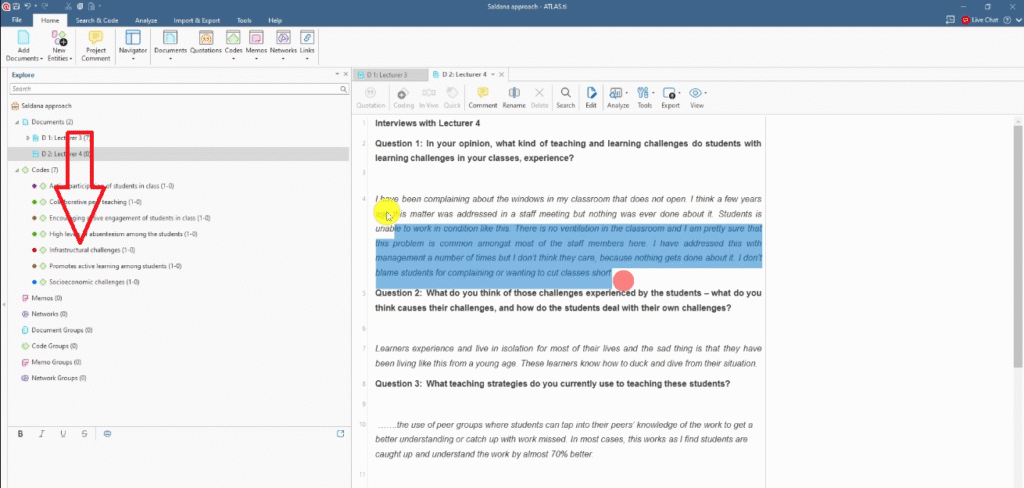
This code is going to support that statement from Lecturer 4.
So we highlight this section.
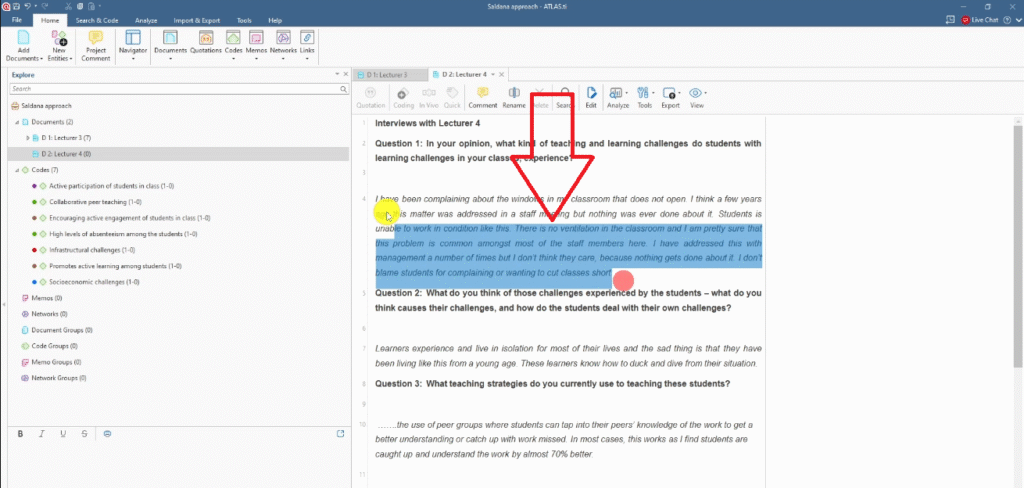
Right click.
Apply code, but we are going to apply this code to an already existing code.
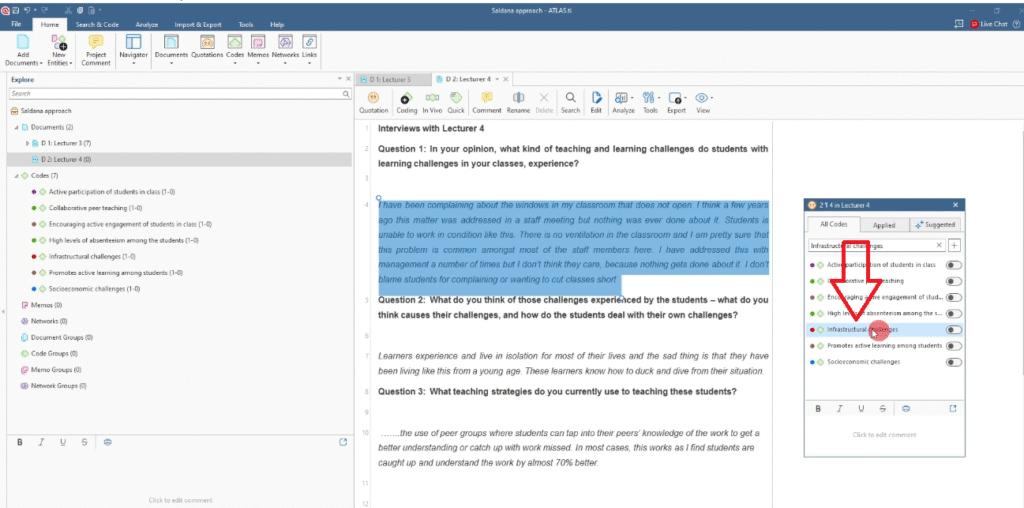
Then click on plus.
Now here we have two codes.
If I double-click on this code, you will see that we have two quotes.
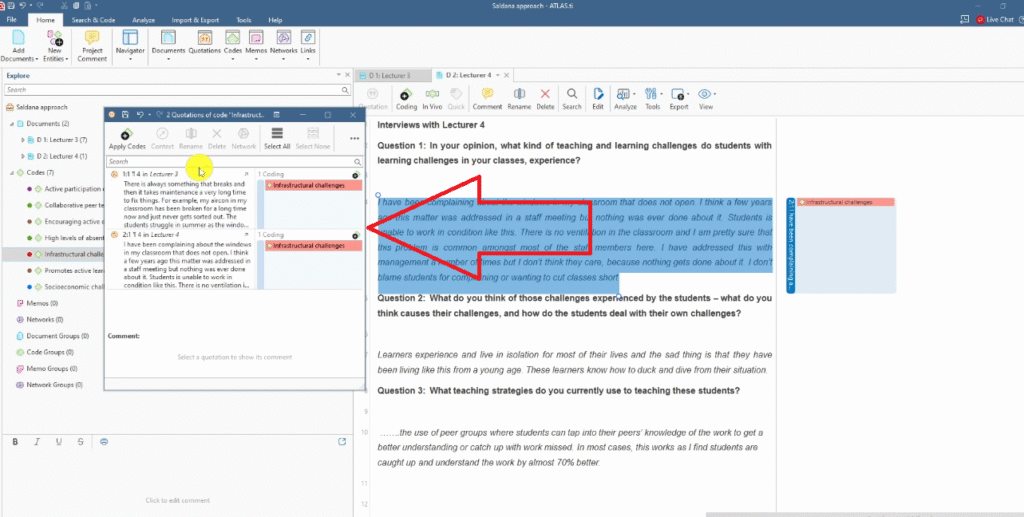
That is how we combine quotes that support the same code.
And this is the first step of saldana, which is coding and categorizing codes.
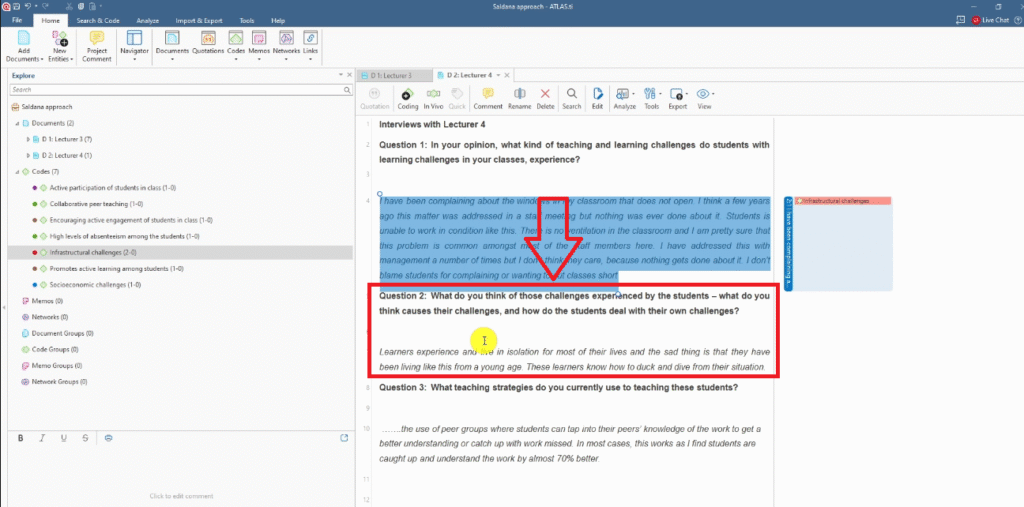
So question number two, What do you think of those challenges experienced by students, what do you think causes their challenges and how do students deal with their own challenges?
Learners experience and live in isolation for most of their lives and the sad thing is that they have been living like this from a young age. These learners know how to duck and dive from their situation.
So what do you think of those challenges experienced by students?
Learners experience and live in isolation for most of their lives and that’s the sad thing. They have been living like this from a young age.
so one of those challenges experienced by a student is isolation from the larger society.
Remember, codes are just trying to interpret what a person is saying. .
So isolation from the society can be the code there.
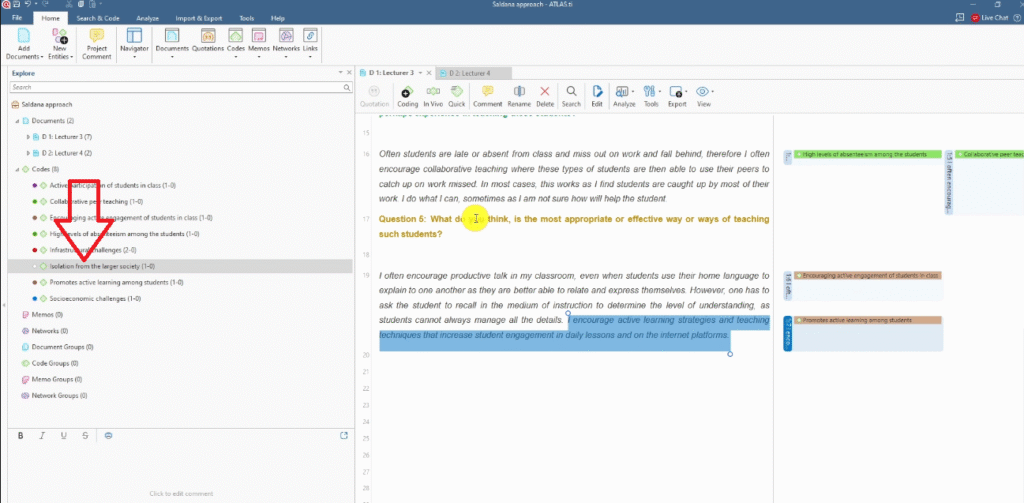
And the color code for question two is blue.
Let’s go to the third question. What teaching strategies do you currently use to teach these students?
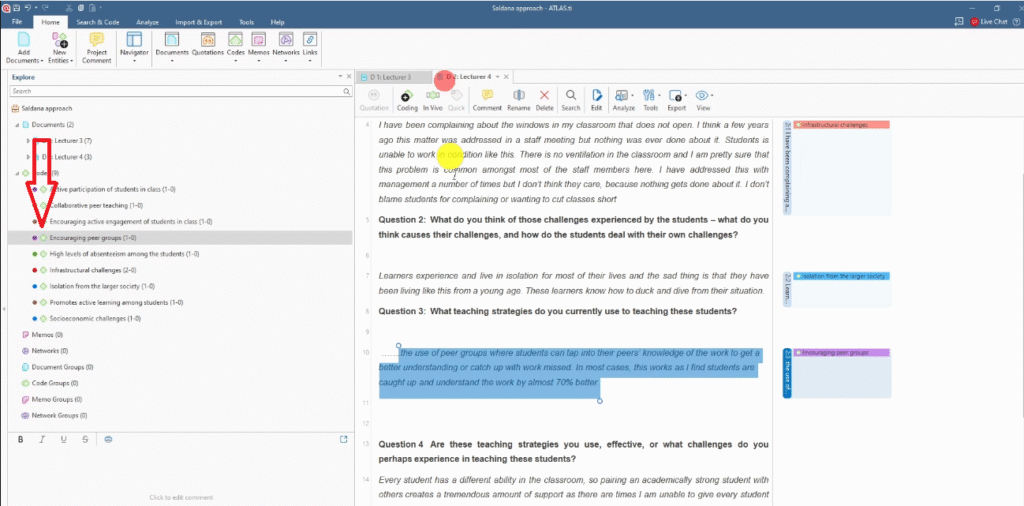
…….the use of peer groups where students can tap into their peers’ knowledge of the work to get a better understanding or catch up with work missed. In most cases, this works as I find students are caught up and understand the work by almost 70% better.
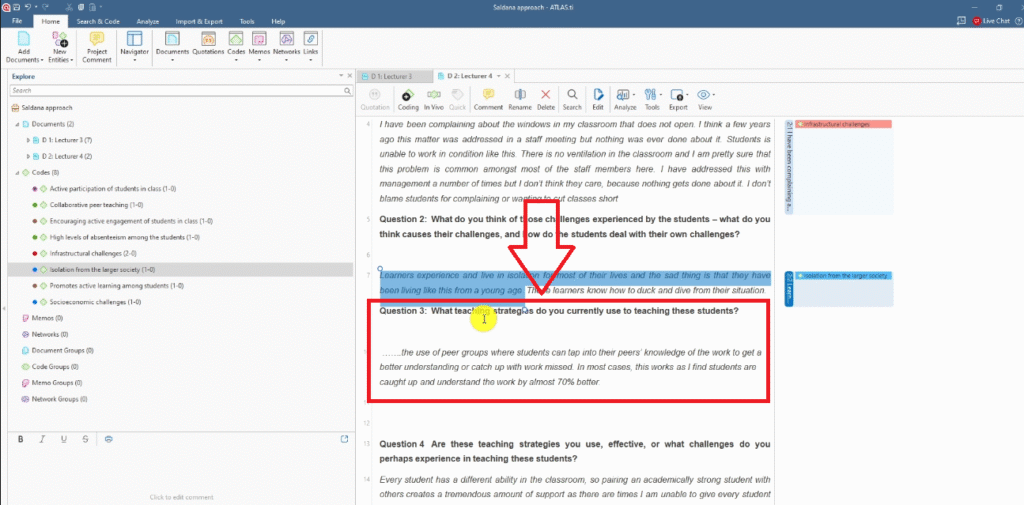
So I can code that as encouraging peer groups, then mark it code as purple.
Let’s go to question number four.
Are these teaching strategies you use effective, or what challenges do you perhaps experience in teaching these students?
Every student has a different ability in the classroom, so pairing an academically strong student with others creates a tremendous amount of support as there are times I am unable to give every student individual attention. There is just not enough time in the trimester to finish the syllabus.
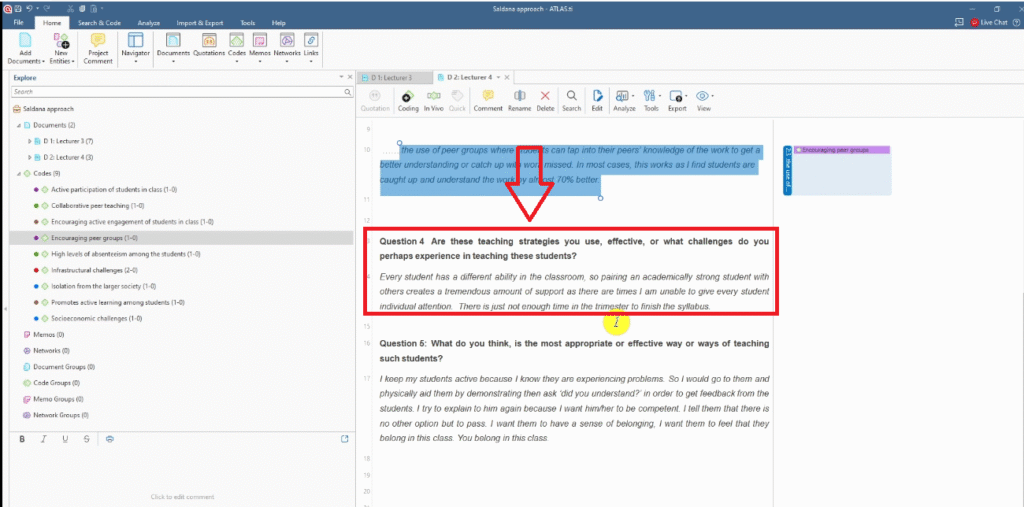
So I want to highlight this last segment.
Then highlight it as a challenge, which is lack of sufficient time to finish the syllabus within the semester.
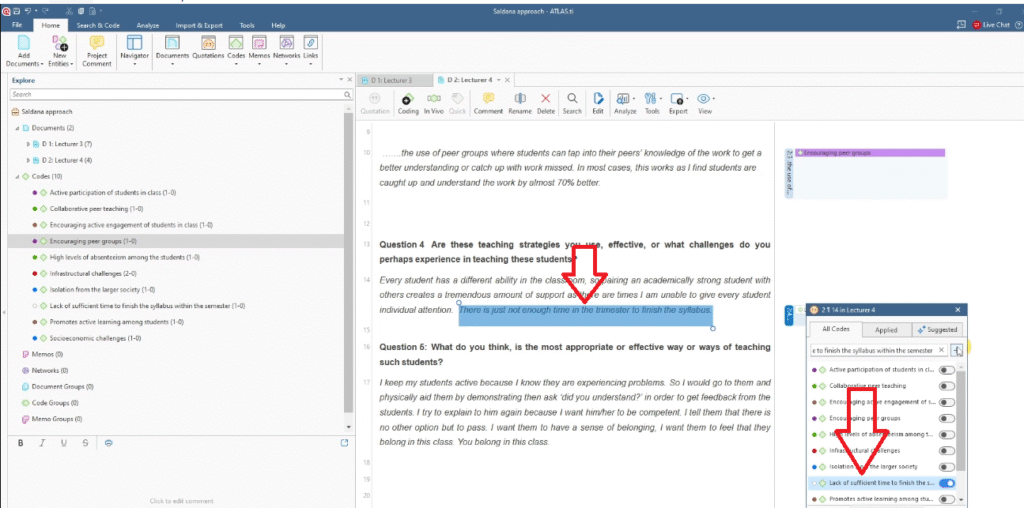
So for this question, we are going to change color to light green.
Let us keep going.
what do you think is the most appropriate or effective way or ways of teaching such students?
I keep my students active because I know they are experiencing problems. So I would go to them and physically aid them by demonstrating then ask ‘did you understand?’ in order to get feedback from the students. I try to explain to him again because I want him/her to be competent. I tell them that there is no other option but to pass. I want them to have a sense of belonging, I want them to feel that they belong in this class. You belong in this class.
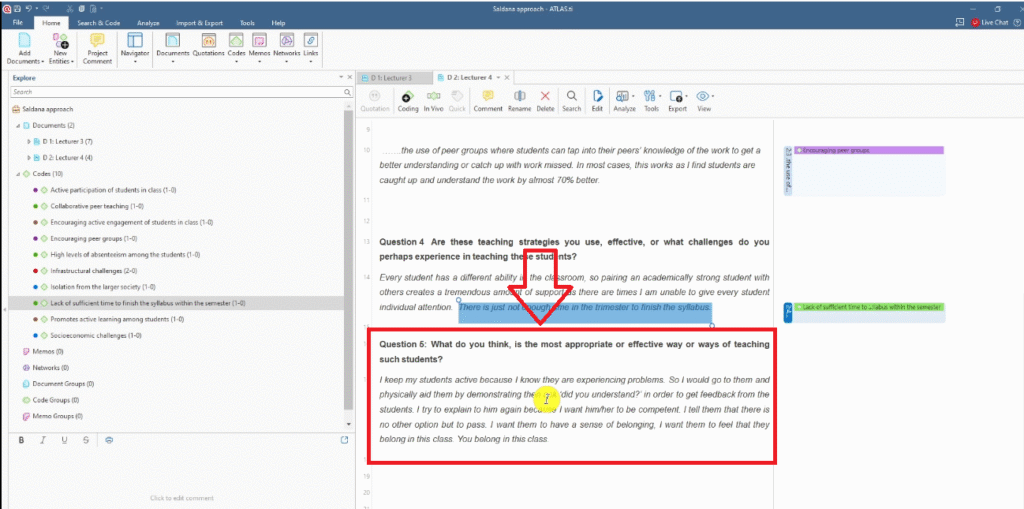
So what do you think is the most appropriate or effective ways of teaching such students?
Keeping the students active in class.
If you remember, we had the same code, promoting active learning among students.
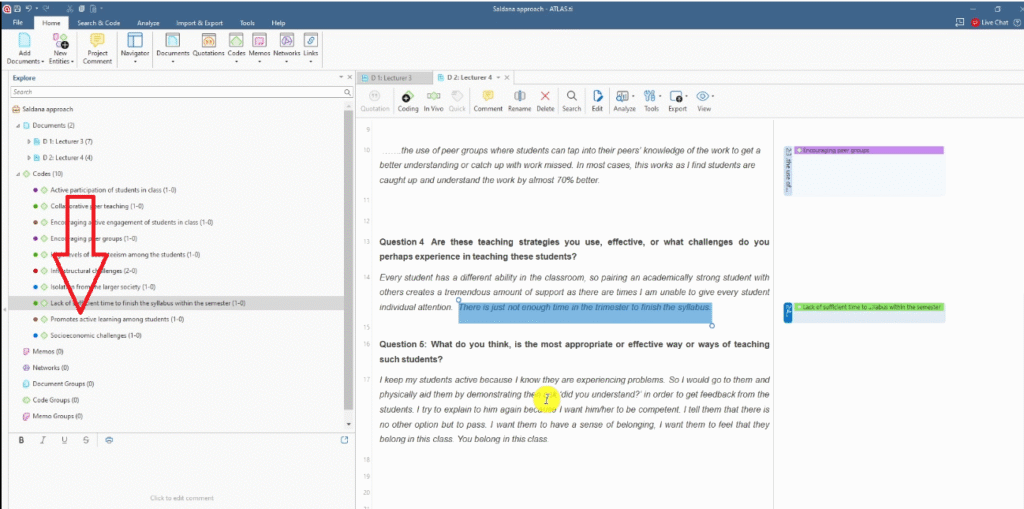
Here we just add or apply codes to an already existing code.
Click the plus sign.
And if you double click at this code, you can see it now has two quotes.
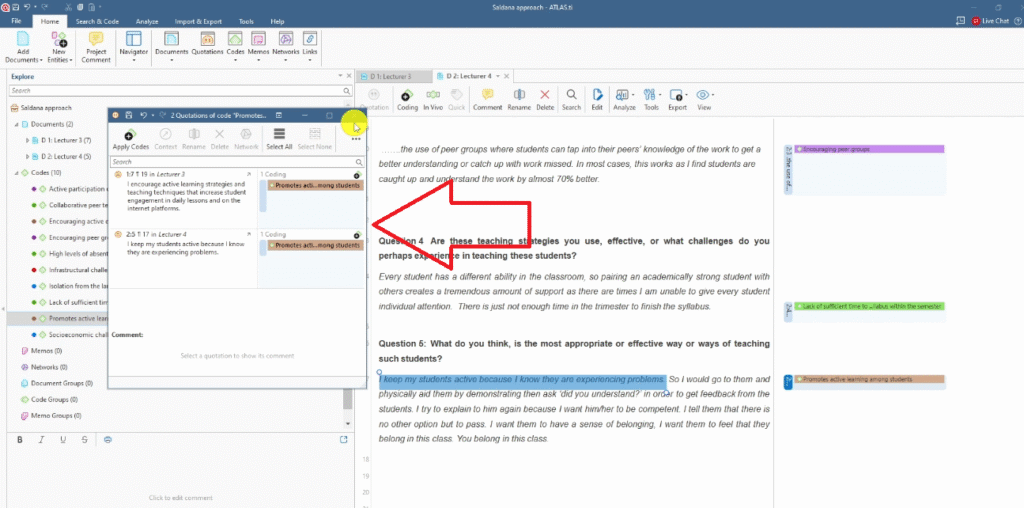
Basically that is how we perform the first step of thematic analysis according to Saldana, which is coding and categorizing codes.
Developing high level categories
The second step in following the Saldana’s approach of thematic analysis is to develop high level categories.

We have to group the codes that we got into high level categories based on meaning.
If you look at this questions, in your opinion, what kind of teaching and learning challenges do students with in your class experience?
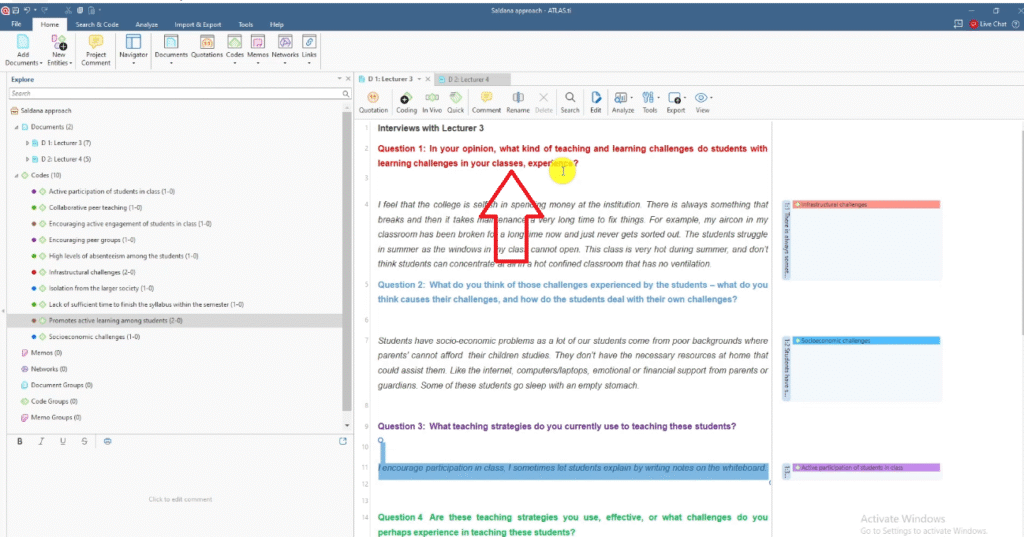
This one will be teaching and learning challenges.
I want to create a folder and call it teaching and learning challenges.
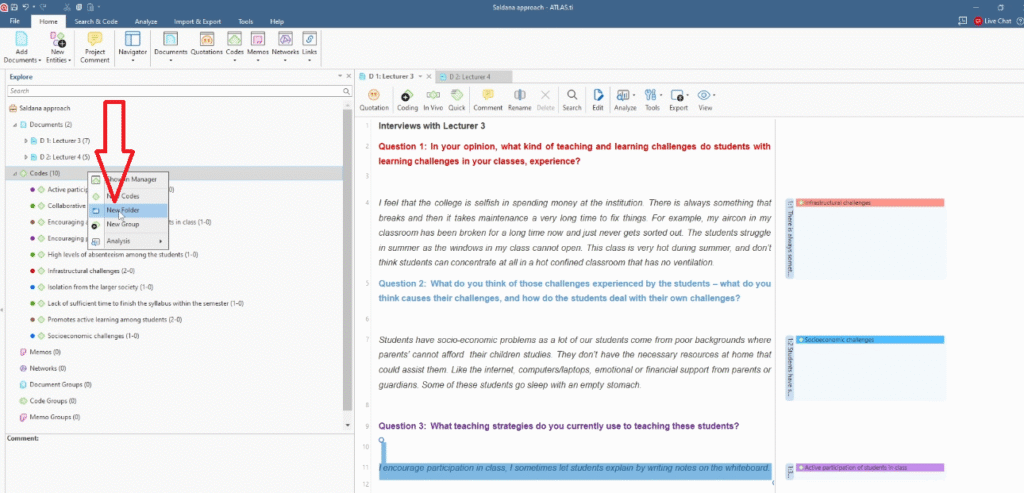
This is developing high level categories.
Teaching and learning challenges.
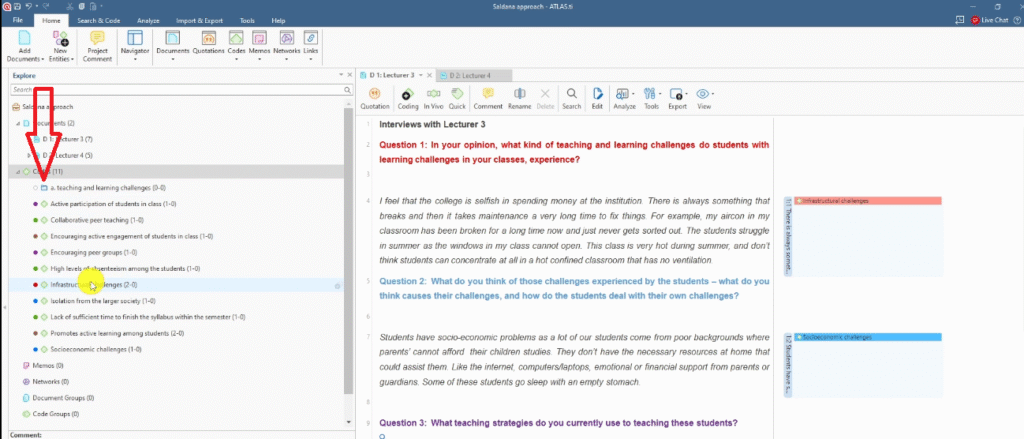
So all codes that are marked in red will go to that high level category.
I drag and drop all the red color coded codes in there.
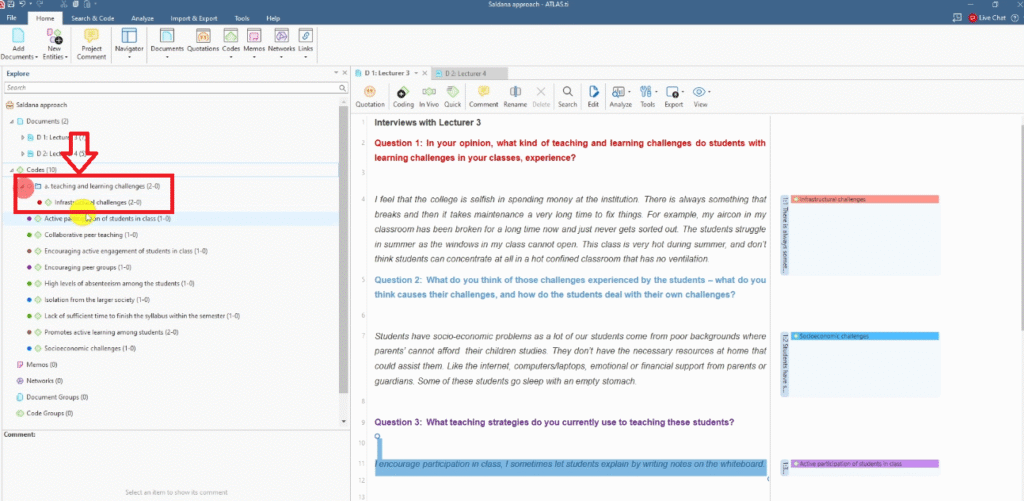
Let us have a second category.
If you read this question, what do you think of those challenges experienced by students?
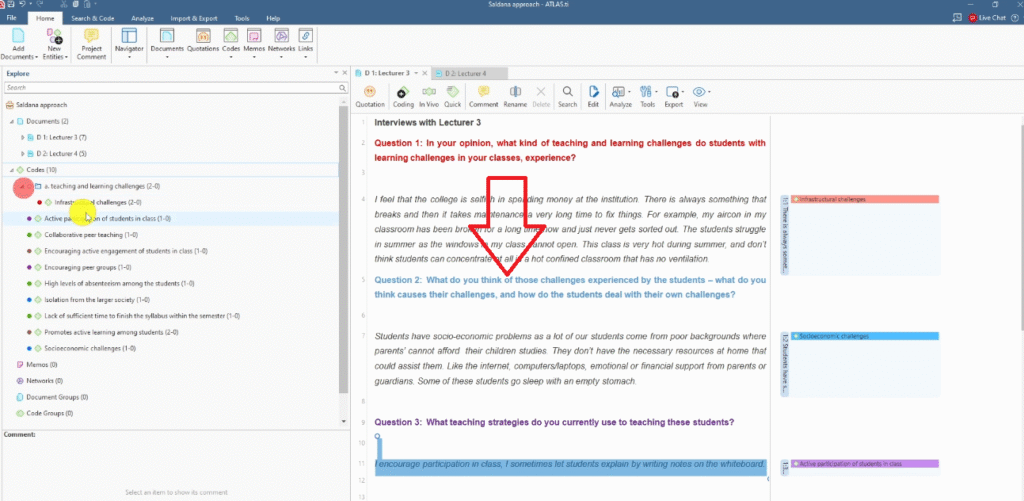
So I want to create a folder called B challenges experienced by students.
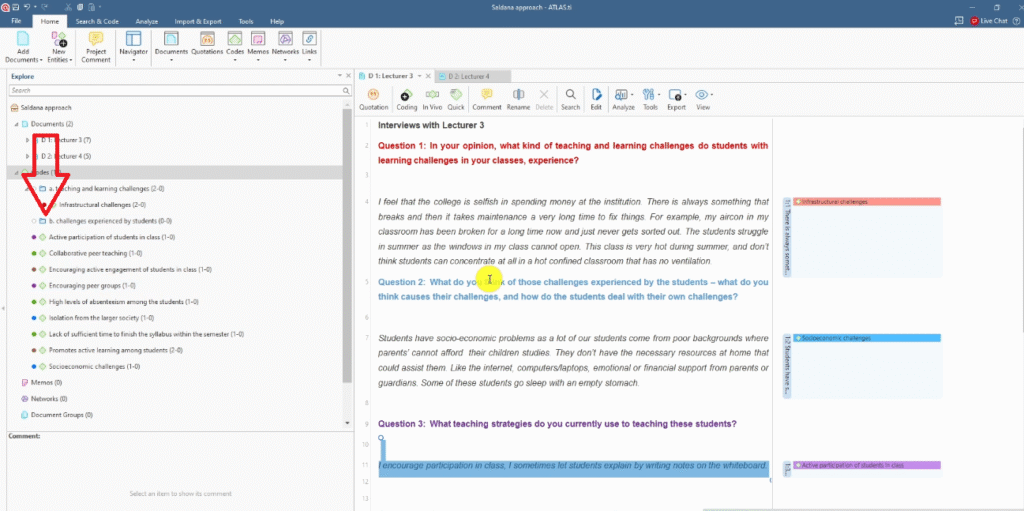
So drag and drop the blue code under a high level category.
So I assign all the blue codes to a higher level category.
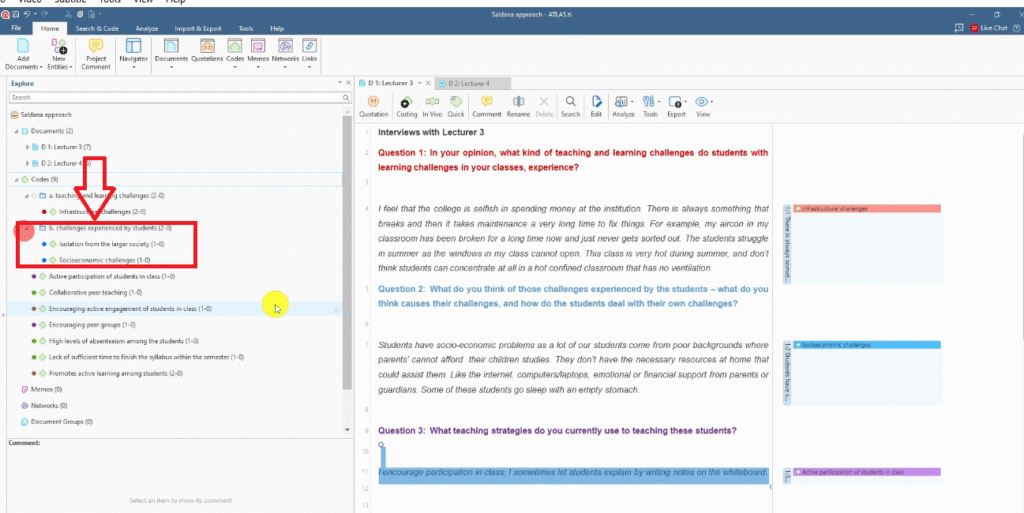
We have two categories so far.
Let us read the third question.
What teaching strategies do you currently use to teach these students?
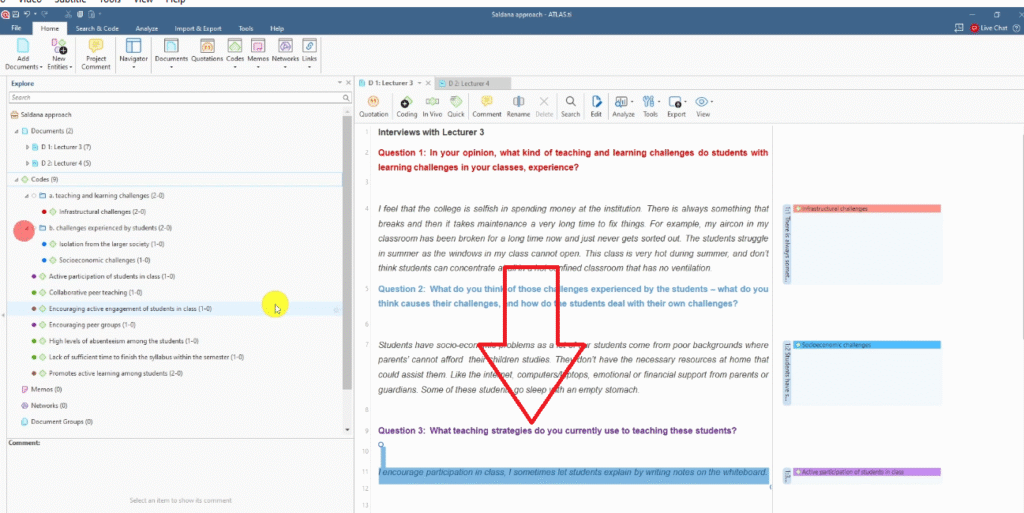
Create a category and call it C teaching Strategies.
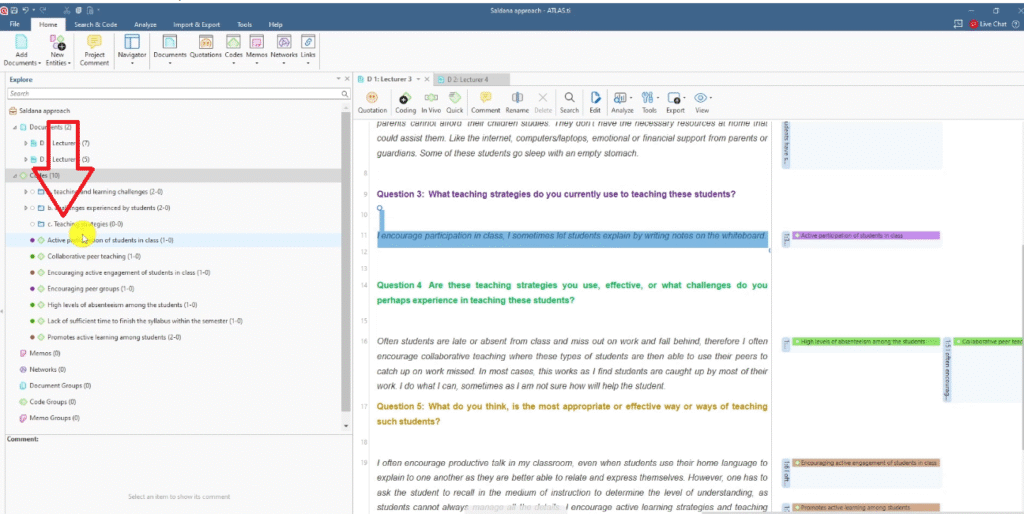
So any code that is purple I drag and drop it inside that category.
That is how we establish high level categories.
Question number four, are these teaching strategies you use effective? What challenges do you perhaps experience with these students?
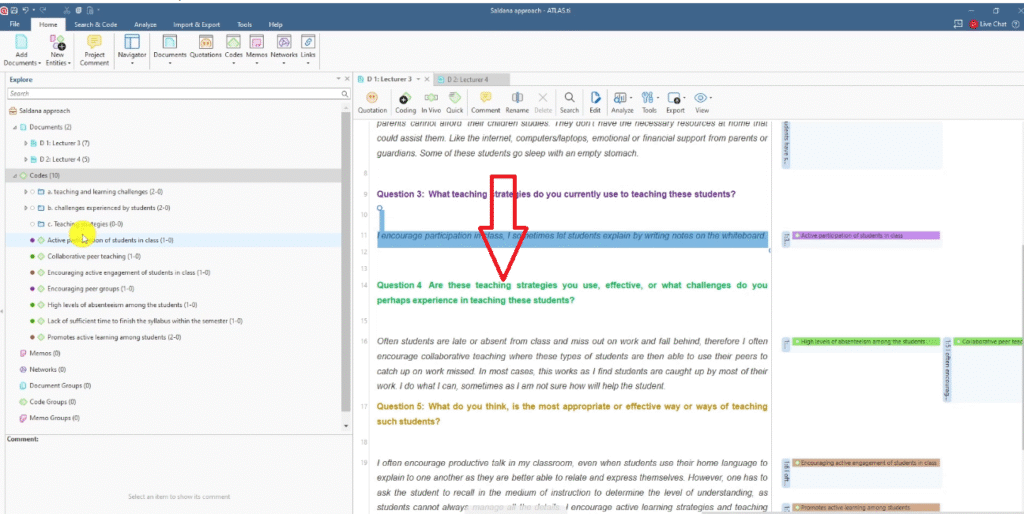
This will be D effectiveness of teaching strategies.
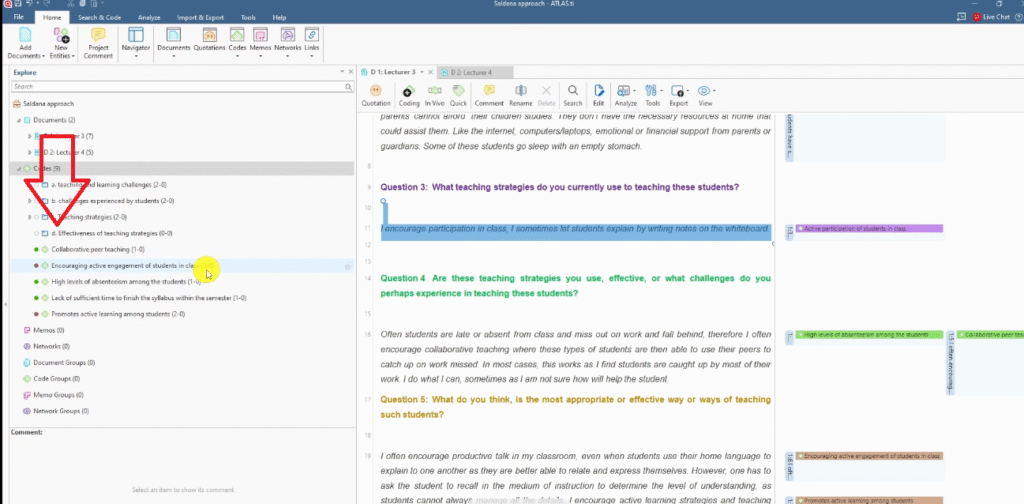
Drag all the green codes inside that category.
Effectiveness of teaching strategies.
And finally, what do you think is the most appropriate or effective way or ways of teaching students?
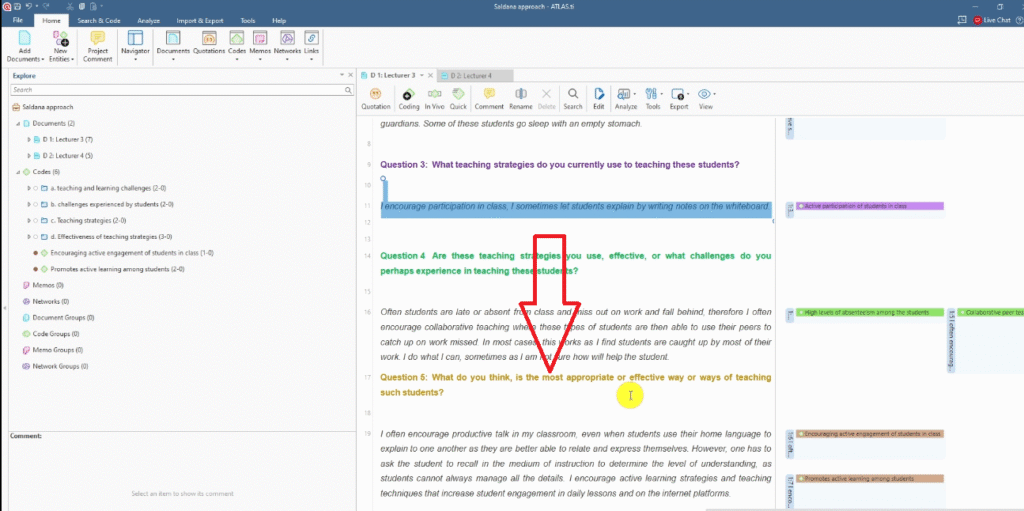
This one will be category number E effective approaches of teaching students.
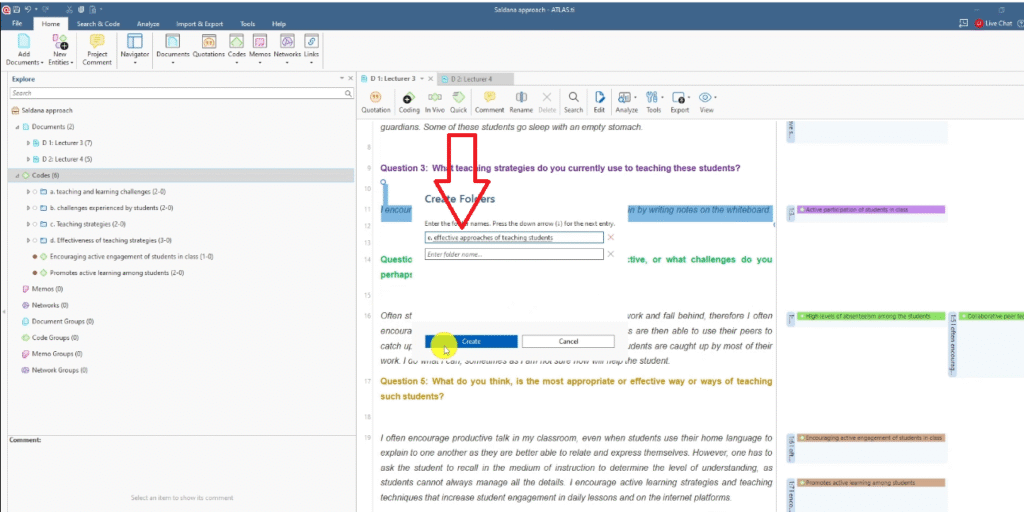
So all the codes that are brown in color, I drag and drop them inside the category created.
Now we have conducted a second step proposed by Saldana in doing thematic analysis, which is coming up with higher level categories.
Generating themes through analytic memoing
Now let’s go to the third step of doing thematic analysis following the Saldana’s approach, which is generating themes through analytic memoing.

We are going to move from this categories to themes.
Remember, for you to preserve how you are working it is better to copy this folder then go and revise it later on your free time.
I want to move to the third step of Saldana’s approach to thematic analysis which is developing themes through analytic memory.
So we are going to move from high level categories to themes.
Let us think about this category teaching and learning challenges.
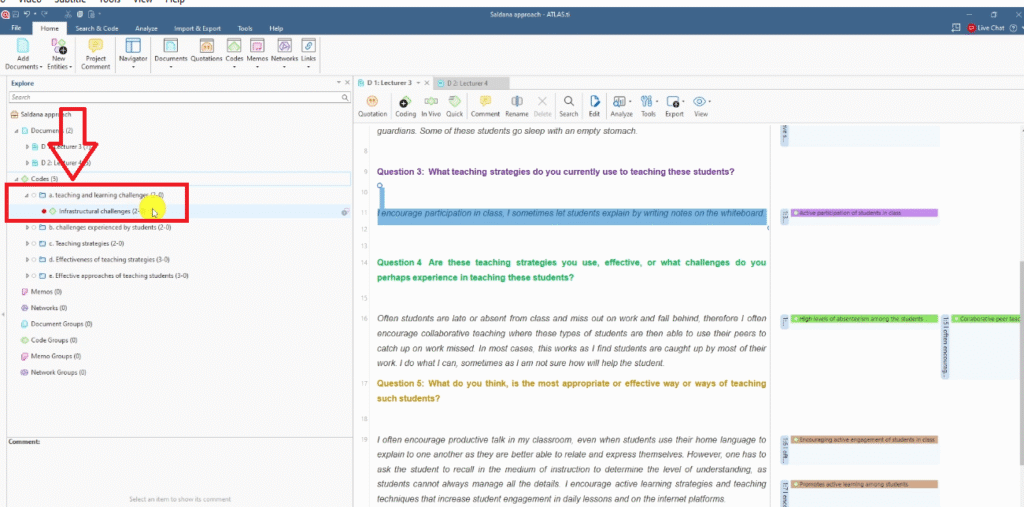
This can be a theme.
So I can go and rename and call this theme A teaching and learning challenges.
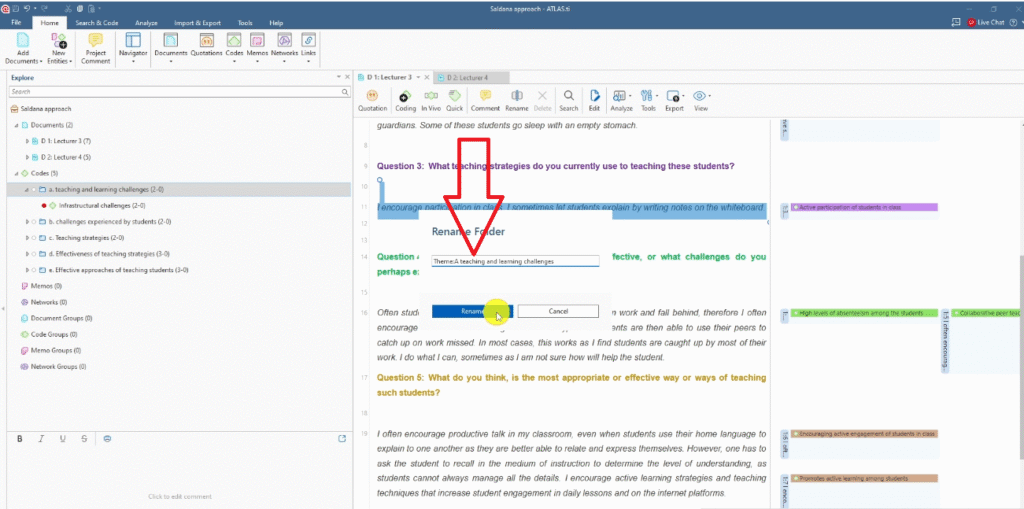
And also because we are having themes and we are doing analytic memory, let us go and add a memo or add a description for each theme.
We right click on the folder then use the function of edit comment.
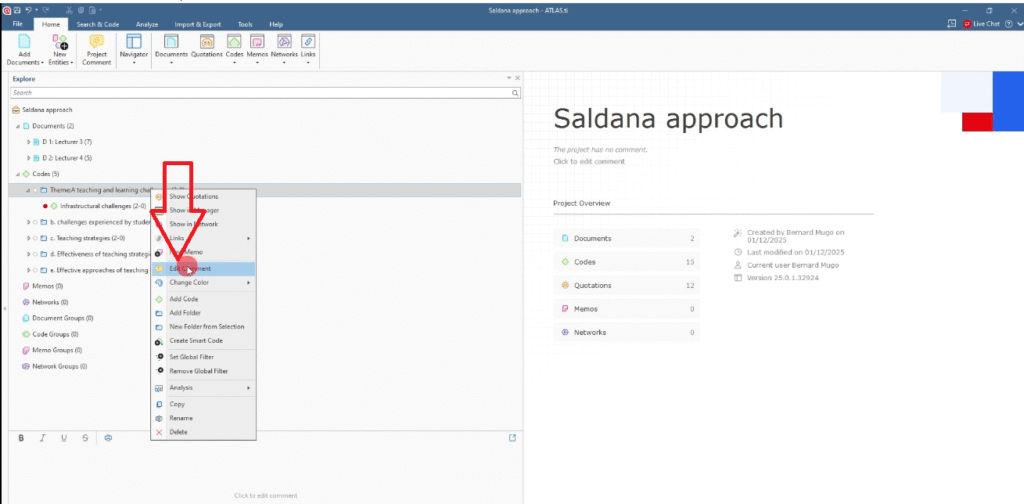
Let’s write a description for this theme and do that for at least three themes.
This theme represents the different teaching and learning challenges that the students and teachers experience in the community college.
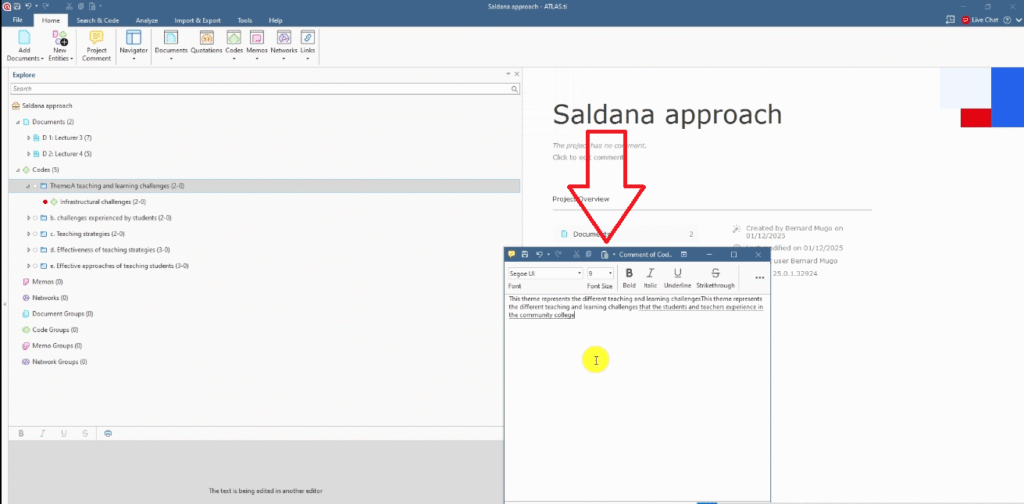
When writing a description, we have to give a very clear description.
Let’s go to the second category and rename it to theme B challenges experienced by students.
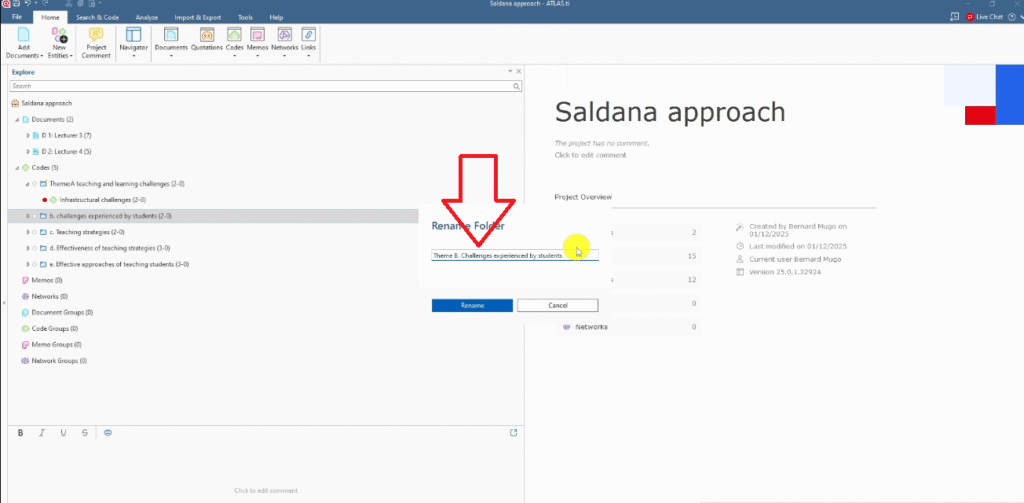
I think I like it as a theme, that is a very well defined theme.
Let us write the description for it.
So this theme highlights all the different challenges experienced by students in the community college.
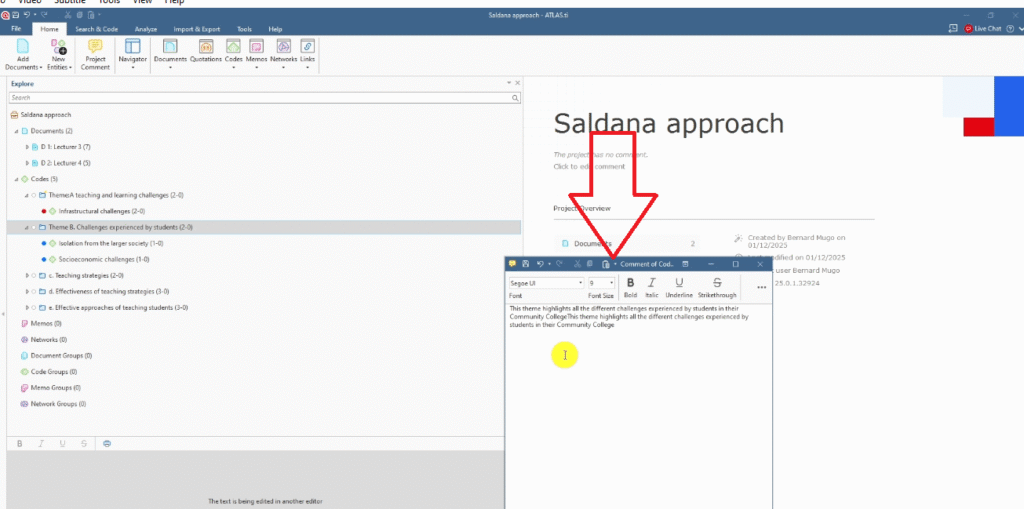
I like that we can keep saving this project.
Let’s go to the third one.
Teaching strategies.
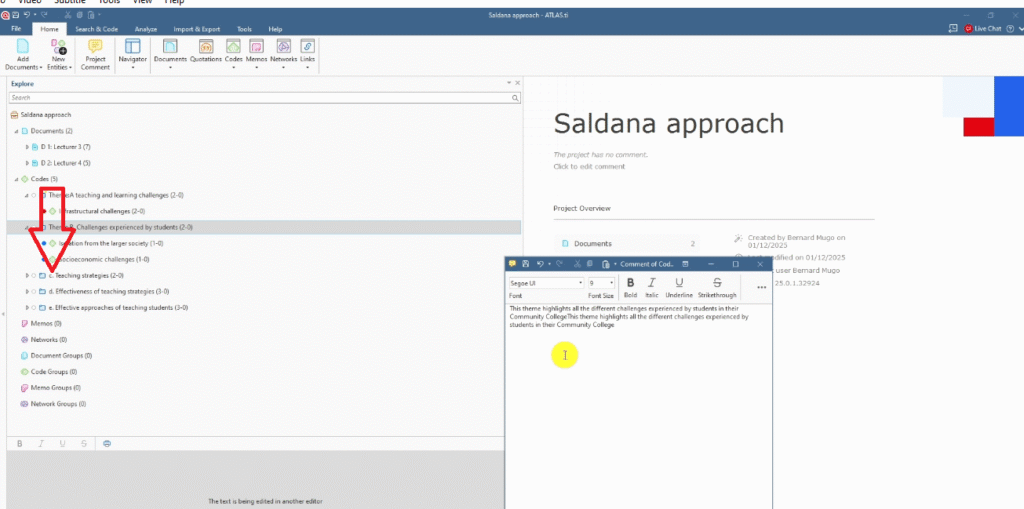
That is a very clear theme, so I re-name it to theme C teaching strategies.
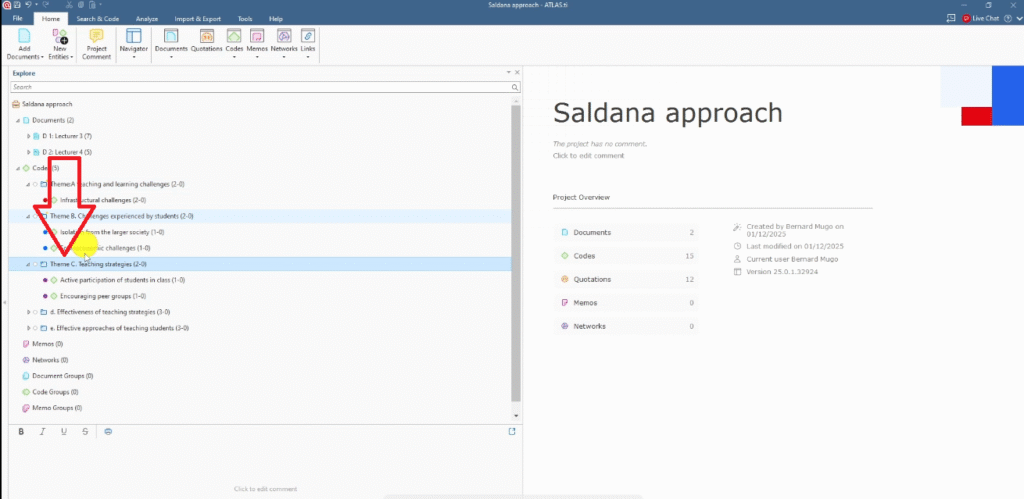
Then I right click, edit comment, and write that this theme represents the different teaching strategies applied by teachers to impart knowledge among the students in the community college.
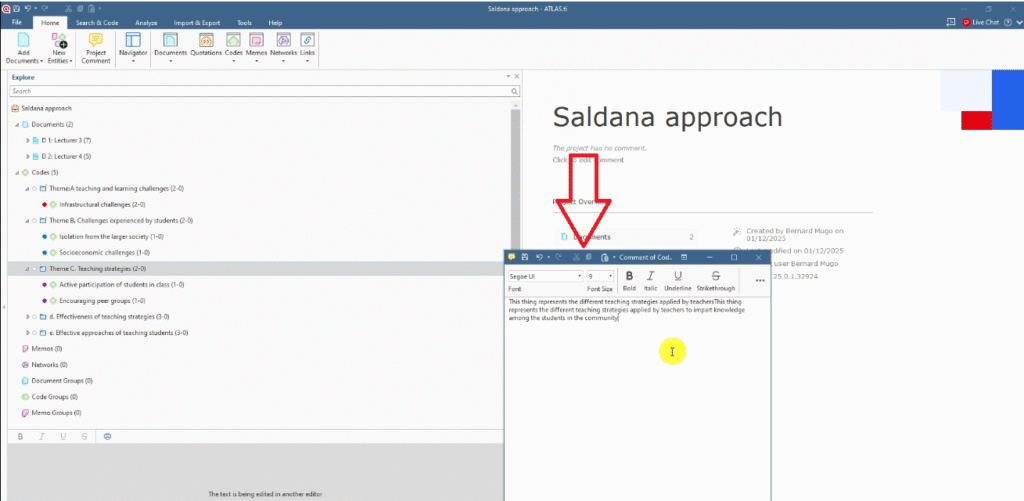
Then again, we have another theme here.
Effectiveness of teaching strategies.
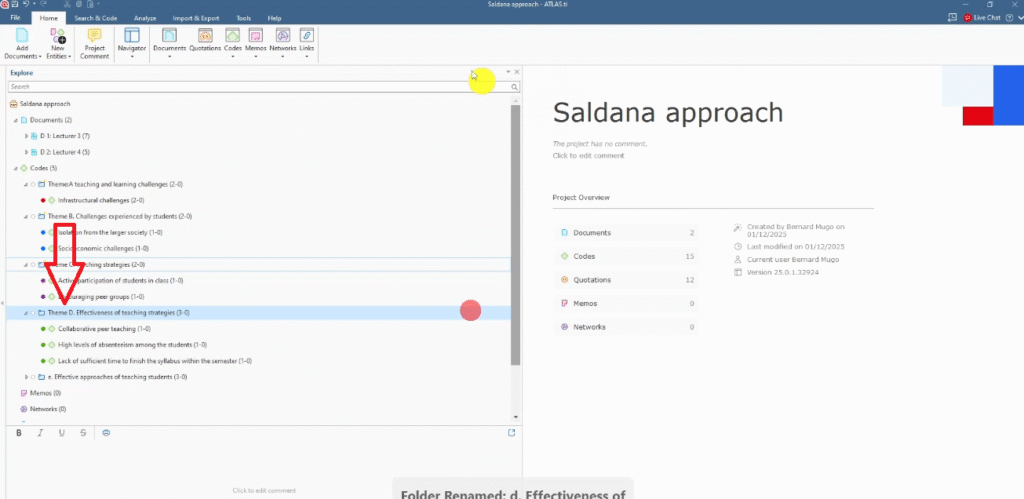
Effectiveness of teaching strategies.
Right click, go to edit comment then write a memo and say.
This name represents the different strategies that the interviewed lecturers believed were important in teaching the community college students.
And finally we can handle final theme, effective approaches of teaching students.
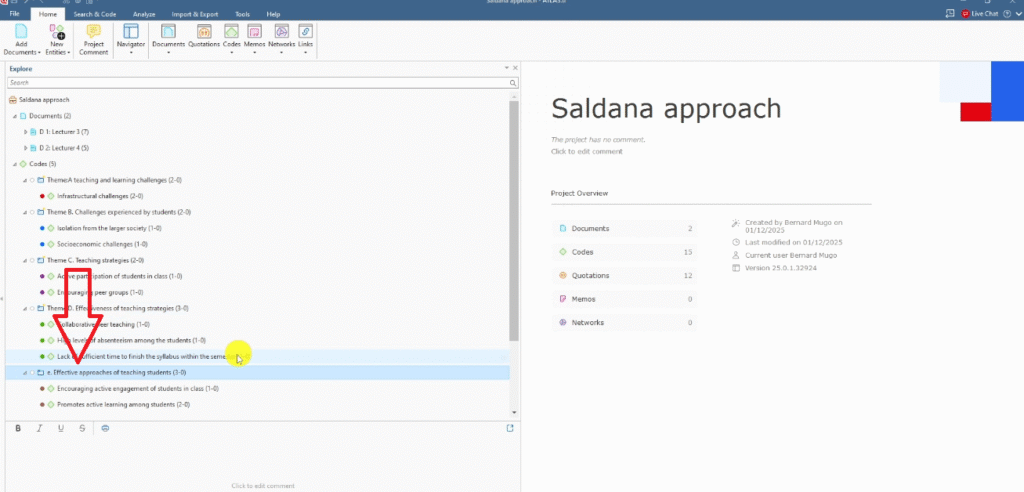
This category look similar to effectiveness of teaching strategies.
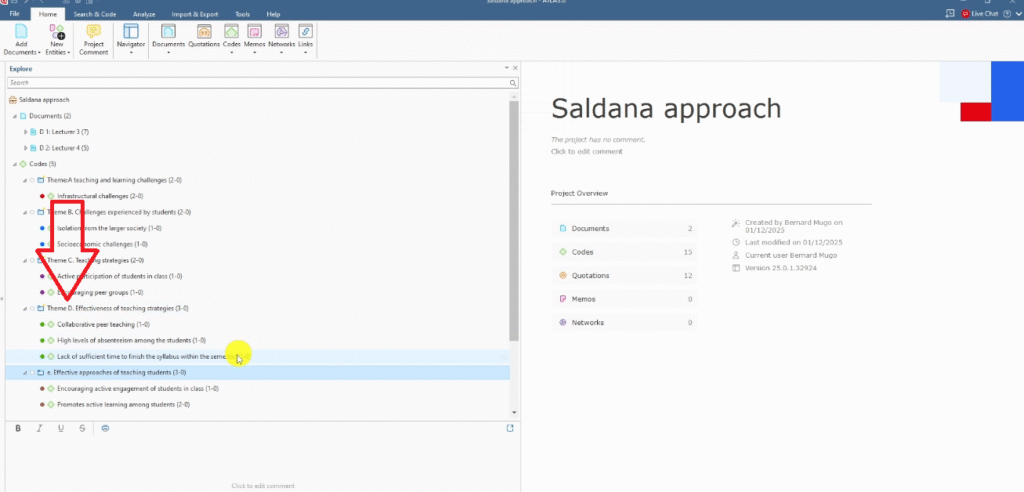
So here we need to review the codes more.
High levels of absenteeism looks like challenges experienced by students.
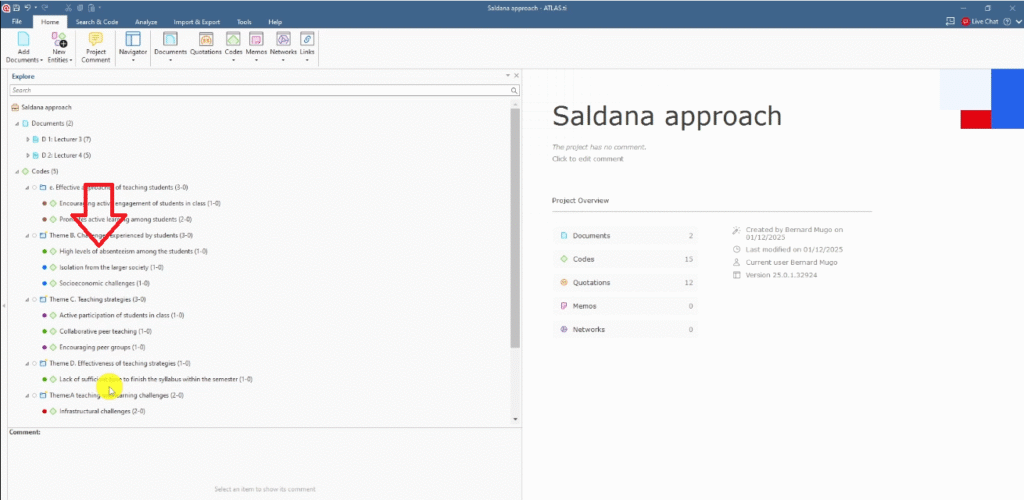
So I move that code to a different container or a different theme.
Collaborative peer teaching looks like a teaching strategy.
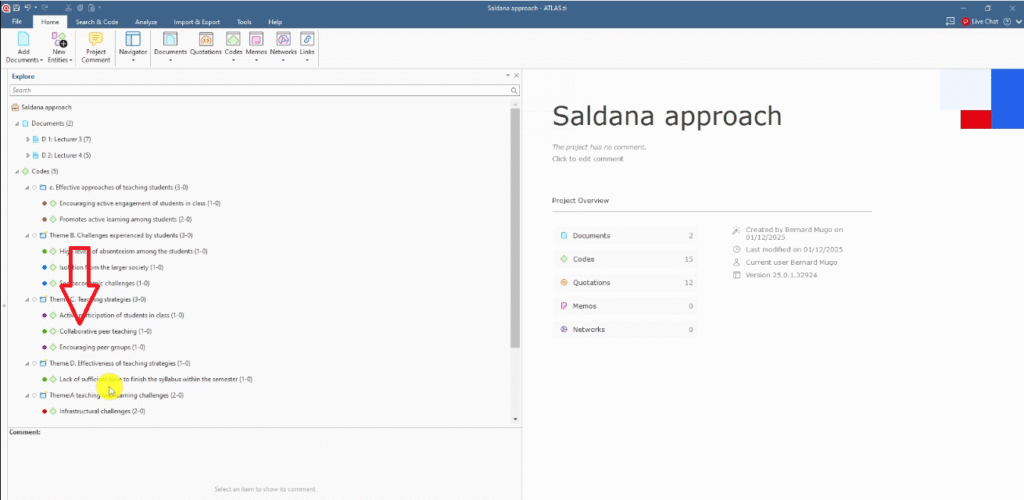
Lack of sufficient time to finish the syllabus within the semester looks like a teaching and learning challenge.
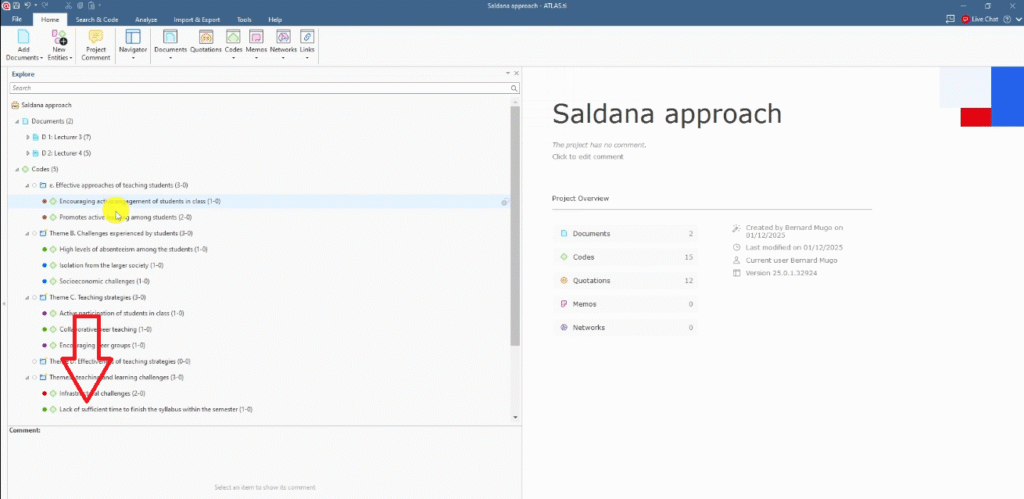
Encouraging active engagements of students in class, I think it falls under teaching strategies.
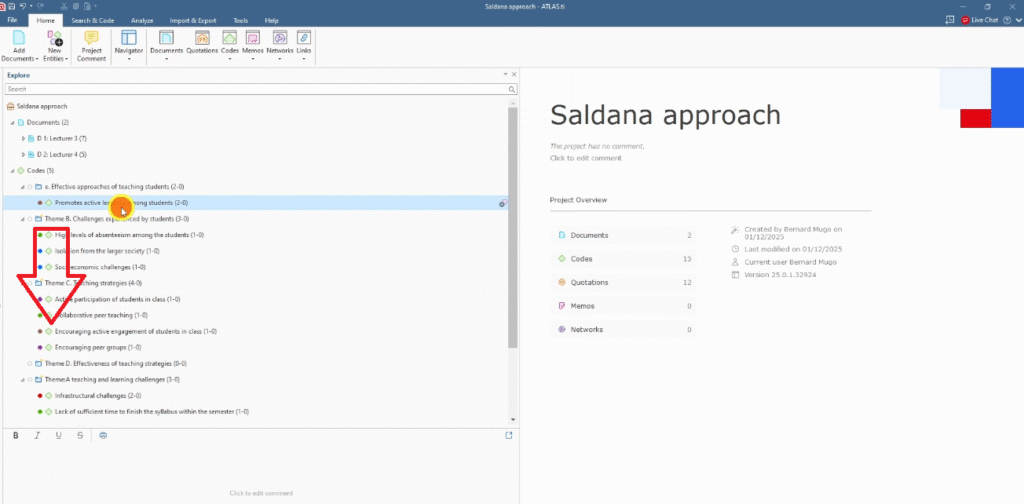
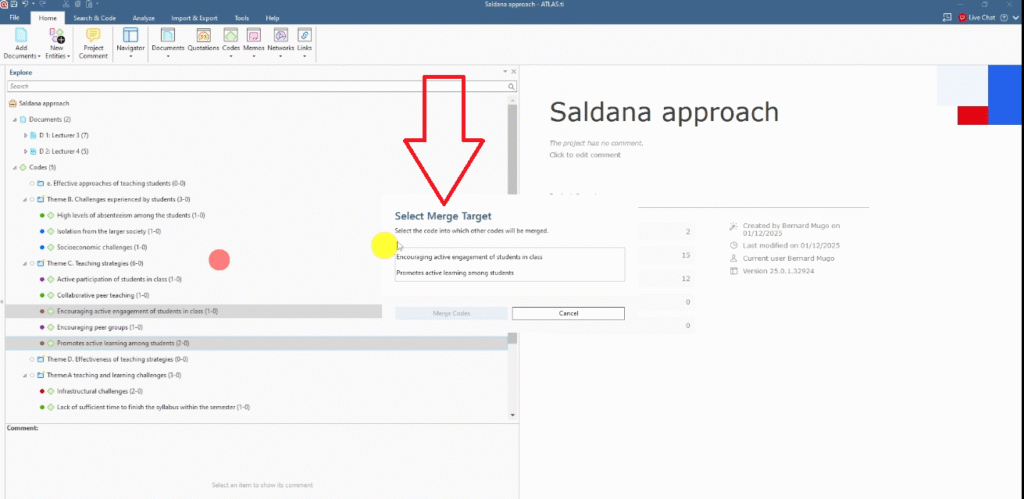
Then I can merge that code with promotes active learning among students because they have the same meaning.
That is how we review and refine the themes.
Initially, we had five categories, but now we only have three themes left.
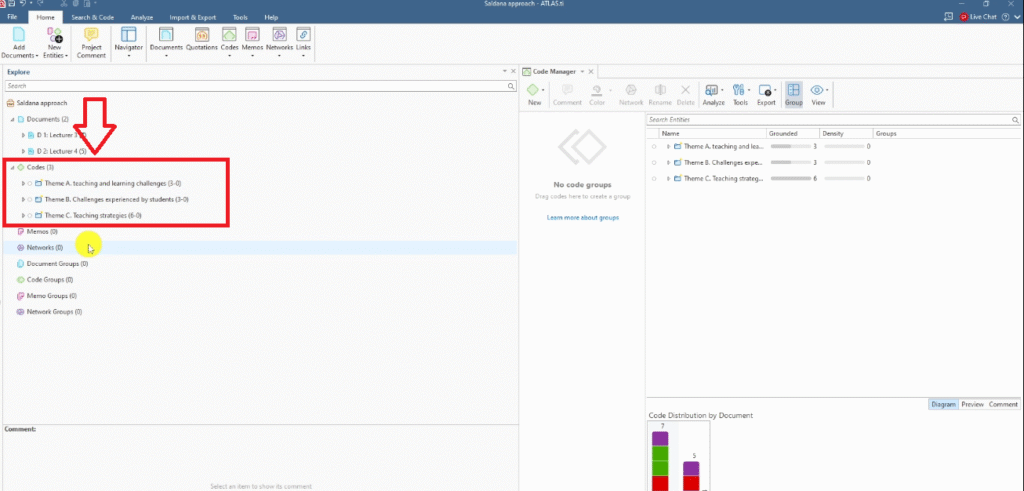
So that is how we generate themes through analytic memoing which is the third step of conducting thematic analysis using the Saldana approach of thematic analysis.
Connecting themes to research questions
The final step of conducting thematic analysis according to Saldana is connecting themes to the research questions.

So we apply themes to research questions, we have two research questions.
What are the main challenges teachers experience when working in a community college?
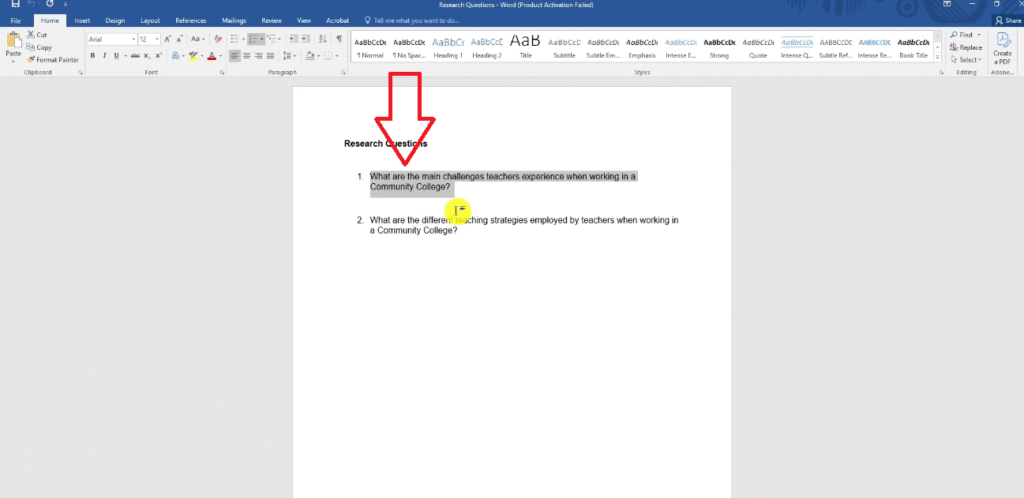
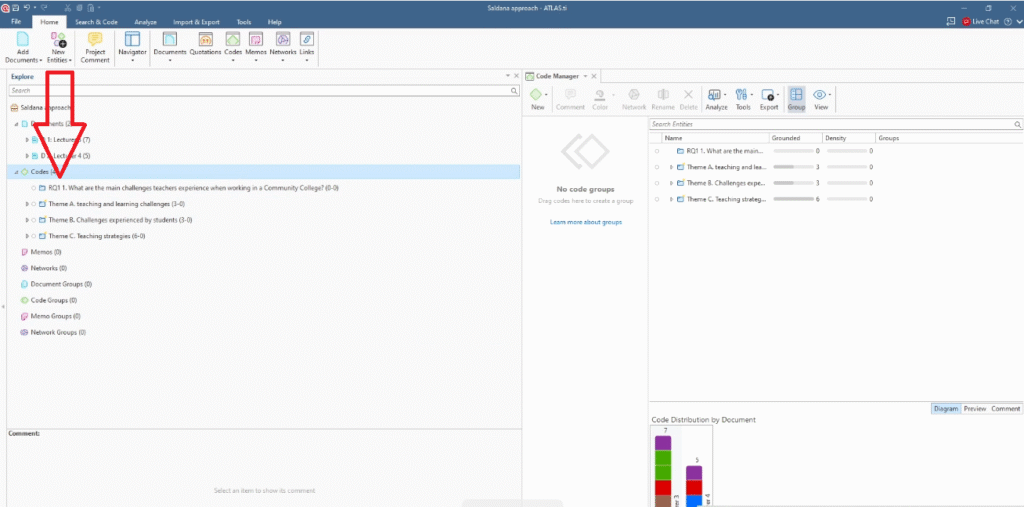
This is research question one. So I import this question inside ATLAS.ti and call it RQ1.
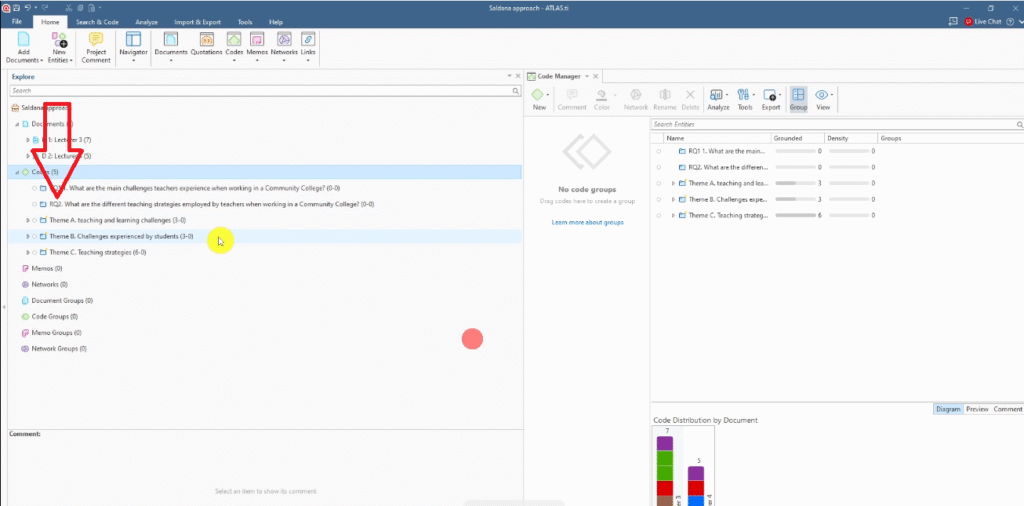
And then I can go and import the second question.
What are the different teaching strategies employed by teachers when working in a community college?
So what are the main challenges teachers experience when working in a community college?
I drag both theme A and B into research question 1.
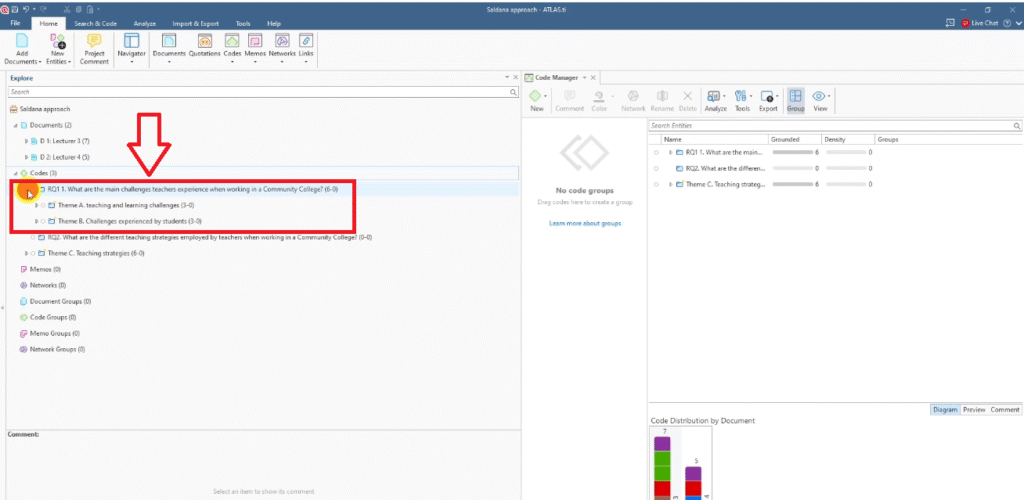
And theme C it’s obvious I apply it to RQ2.
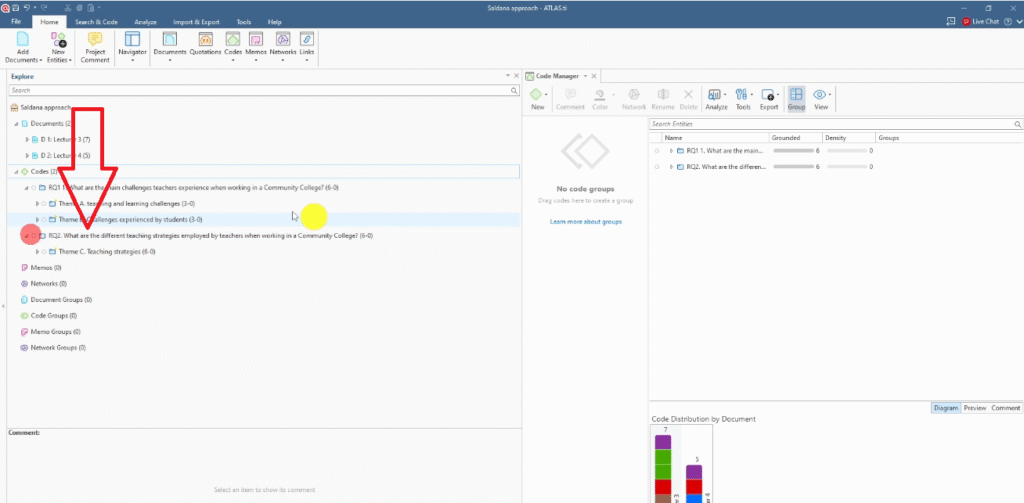
Finally the coding structure will be this way.
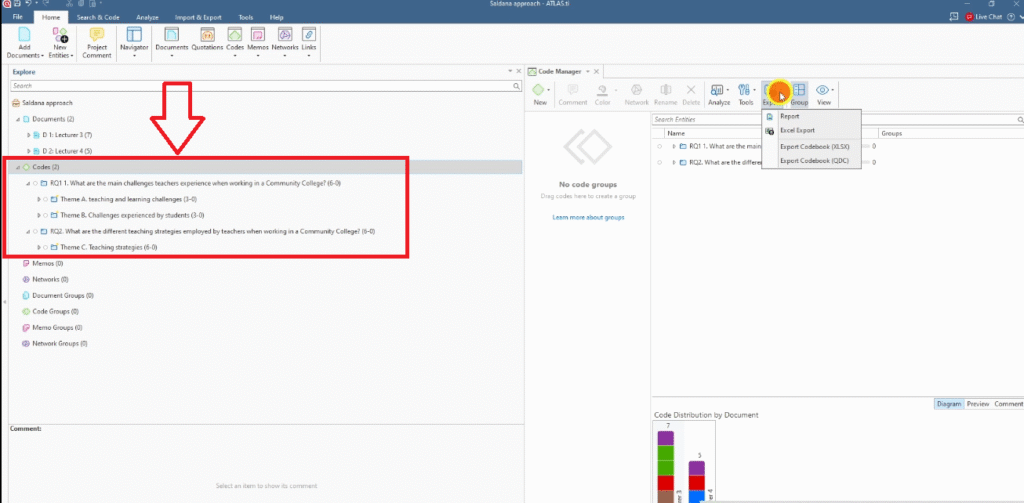
First research question has two themes and the second has one theme.
Ideally that is how we conduct thematic analysis in Atlas.ti following the saldana’s approach.