
Last Updated on 5 months ago by Grace Nyambura
Have you ever finished a round of thematic analysis and wondered — how do I actually defend these findings? If a committee member asks why I interpreted the data this way, what do I say?
That’s a question about validity in qualitative research, and it’s one of the most common concerns I hear from PhD students I work with. In this article, I’ll walk you through nine strategies you can use to justify your findings and make your qualitative research credible, trustworthy, and rigorous.
If you’re still in the earlier stages of your study, you might also want to read my post on the key characteristics of qualitative research before diving in.
- What Is Validity in Qualitative Research?
- Strategy 1 — Triangulation
- Strategy 2 — Disconfirming Evidence
- Strategy 3 — Reflexivity
- Strategy 4 — Member Checking
- Strategy 5 — Prolonged Engagement in the Field
- Strategy 6 — Collaborate With Participants
- Strategy 7 — External Audit
- Strategy 8 — Rich Description
- Strategy 9 — Peer Debriefing
- Frequently Asked Questions
- Key Takeaways
- References
What Is Validity in Qualitative Research?
Validity in qualitative research refers to the extent to which your findings accurately represent the experiences, meanings, and perspectives of your participants. Unlike in quantitative research — where validity is measured statistically — qualitative validity depends on the trustworthiness, credibility, and authenticity of your interpretation. Researchers like Lincoln and Guba (1985) prefer the term trustworthiness to capture this idea more precisely.
Strategy 1 — Triangulation
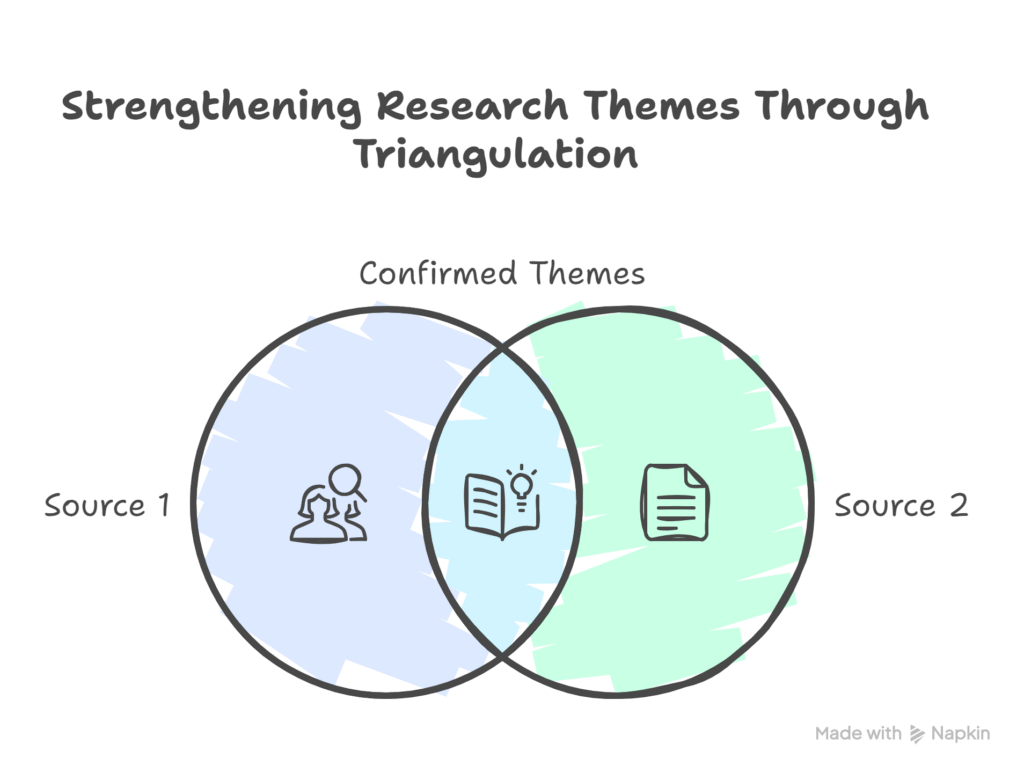
Triangulation means using multiple sources of information to support the themes you identify in your data. The term originally comes from naval navigation — sailors used several reference points to pinpoint their location at sea. In qualitative research, we do something similar.
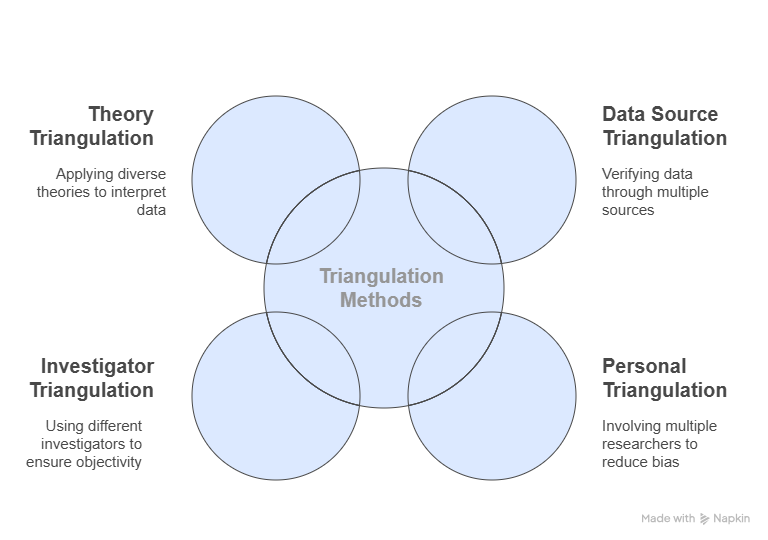
There are four main forms of triangulation:
- Theory triangulation — analysing your data through different theoretical lenses
- Data source triangulation — gathering data from interviews, field notes, and documents (introduced by Denzin in 1978)
- Personal triangulation — getting insights from different types of participants
- Investigator triangulation — having multiple researchers compare their findings
Data Source Triangulation

You might gather data from interviews, field notes, and documents. When the same themes appear across all three sources, you have a much stronger basis for your interpretation.
Personal Triangulation

You can also use personal triangulation — interviewing different types of participants whose perspectives, roles, or experiences vary. When people from different positions arrive at the same core experience, that convergence strengthens your findings.
Investigator Triangulation

Investigator triangulation involves more than one researcher independently analysing the data, then comparing their findings. Where they agree, the interpretation is stronger. Where they disagree, it opens a valuable conversation.
Theory Triangulation

Theory triangulation means examining your data through different theoretical frameworks. If a theme holds up under multiple lenses, that’s a sign it genuinely reflects something in the data. In qualitative research, triangulation often happens naturally during coding — you review different pieces of evidence, compare them, and see what themes consistently emerge.
Strategy 2 — Disconfirming Evidence
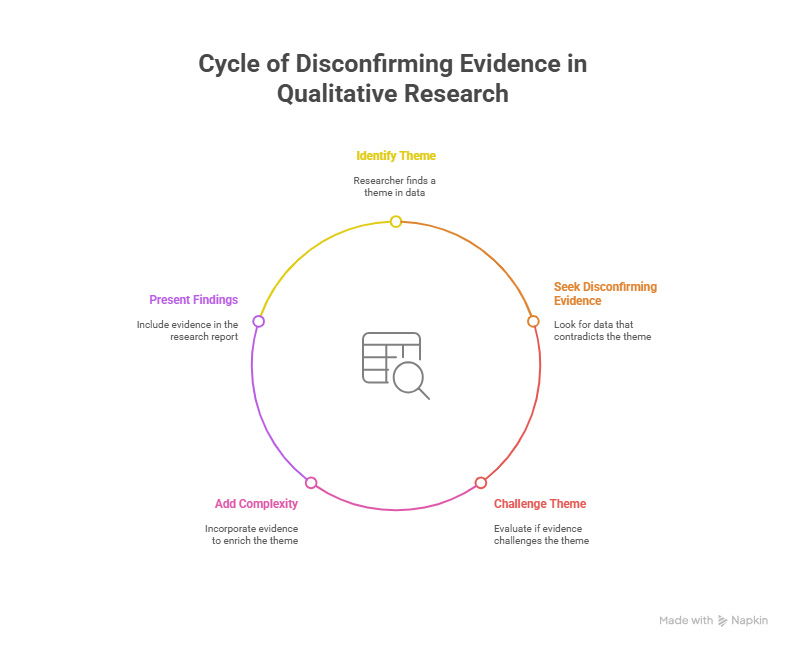
Disconfirming evidence is information that goes against a theme you have identified. Rather than ignoring data that doesn’t fit, a rigorous researcher actively looks for it.

Here’s how it works: you identify a theme based on your data, then go back and ask — is there anything here that suggests a different explanation? This counter-evidence doesn’t have to completely disprove the theme. But it adds complexity, and including it makes your overall account more accurate and realistic.
In practice, researchers include disconfirming evidence as a small part of the theme discussion — it shows your committee that you’ve genuinely wrestled with the data, not just found what you were looking for.
Strategy 3 — Reflexivity
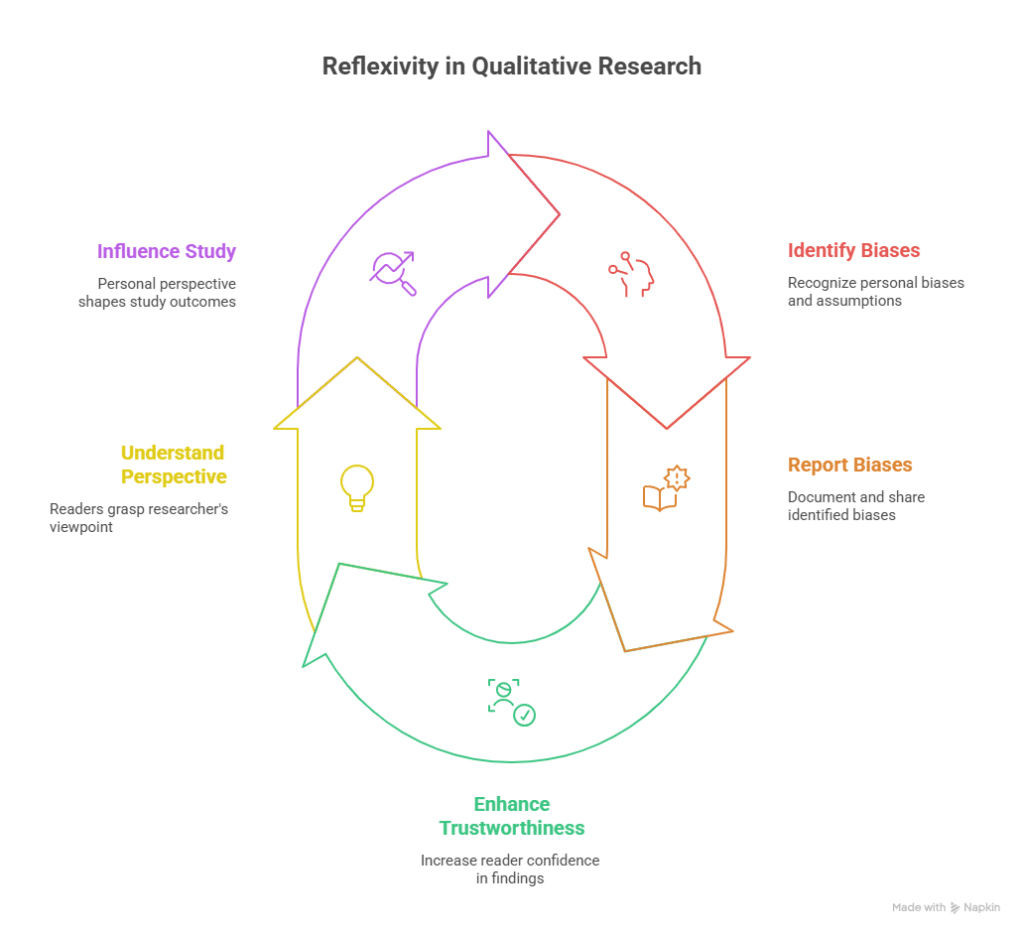
Reflexivity means thinking carefully about how your own background, experiences, and assumptions might influence the way you interpret your data. In qualitative research, you are the instrument of analysis — and that makes your positionality directly relevant to the findings.

Practising reflexivity involves clearly identifying and reporting your biases and assumptions, and explaining how those might shape your interpretations. Rather than weakening your research, this transparency actually strengthens it — readers can better understand where you’re coming from and evaluate your findings accordingly.
In a dissertation, this is typically written up in the Methods section under a heading like ‘Role of the Researcher.’ You briefly explain your relationship to the topic and how you managed your potential biases throughout the study.
For a deeper look at how the researcher’s role fits into qualitative methodology, see my article on how to conduct a qualitative research interview.
Strategy 4 — Member Checking
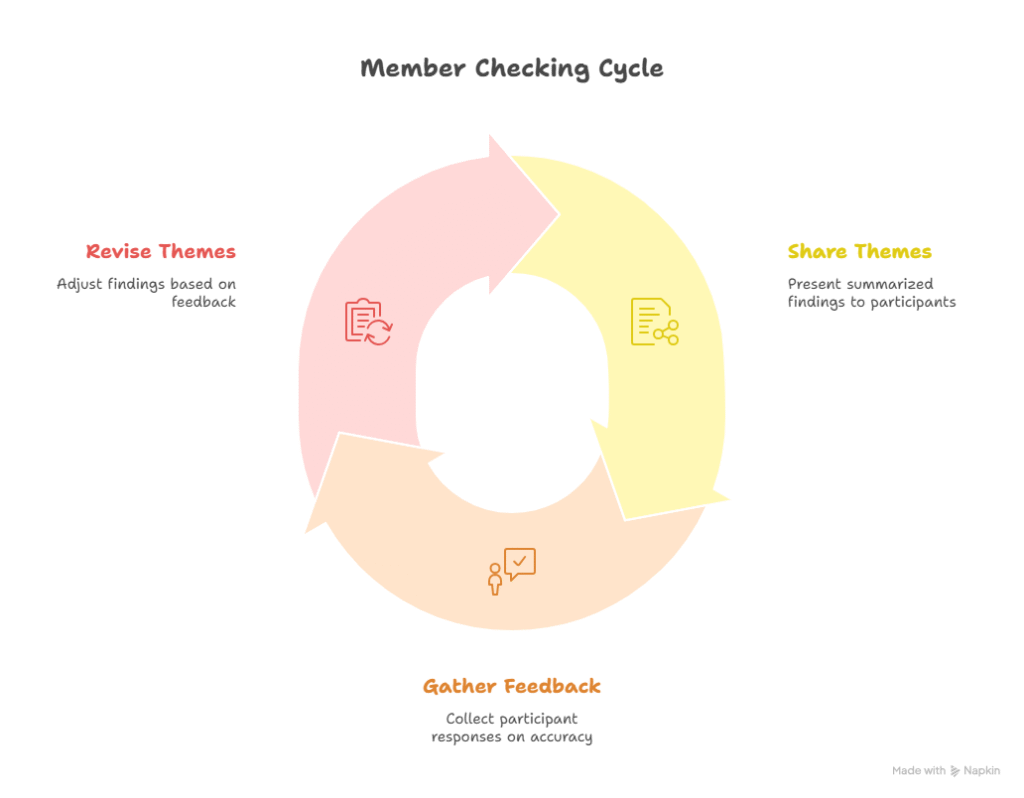
Member checking is the process of sharing your findings back with the participants who generated the data, and asking them whether the interpretation accurately reflects their experience.
You don’t share the full transcripts — you share a summary of the themes you identified. Then you ask participants questions like:
- Does this account feel accurate to you?
- Are there important ideas we’ve missed?
- Is there anything here you’d push back on?
This can happen in a one-on-one follow-up interview or in a focus group setting. If participants point out something that doesn’t feel right, you can revise your themes to better reflect what was actually said. Member checking is one of the most direct ways to demonstrate that your findings represent your participants’ lived experiences — not just your interpretation of them.
Strategy 5 — Prolonged Engagement in the Field
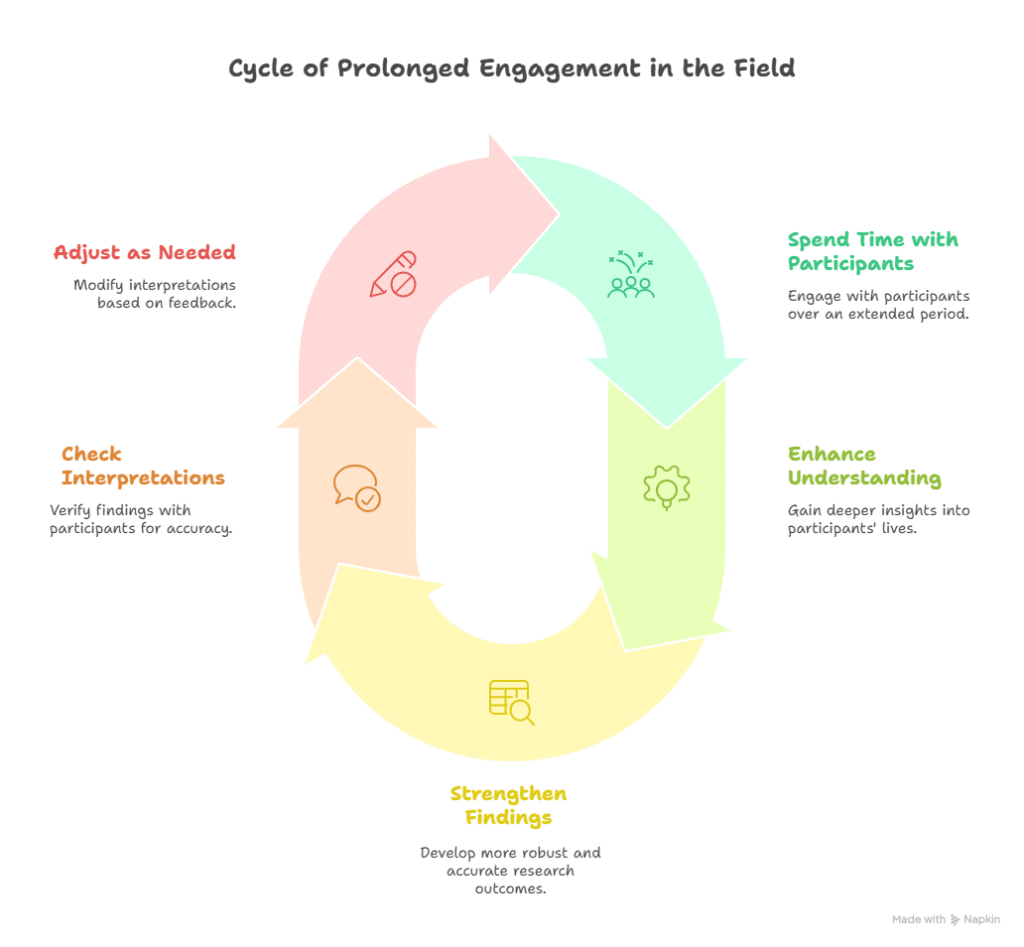
Prolonged engagement simply means spending an extended amount of time with your participants and in your research setting. The idea is straightforward: the more time you spend, the deeper your understanding of the context — and the more accurate and nuanced your findings will be.

There’s no fixed minimum. It depends on your research questions, your participants’ availability, and your resources. But whether it’s weeks or months, a longer presence in the field gives you more opportunities to check your interpretations against reality and make adjustments as you go.
In your methods section, document how long you spent collecting data and interacting with participants — this is evidence of rigour that your committee will look for.
Strategy 6 — Collaborate With Participants
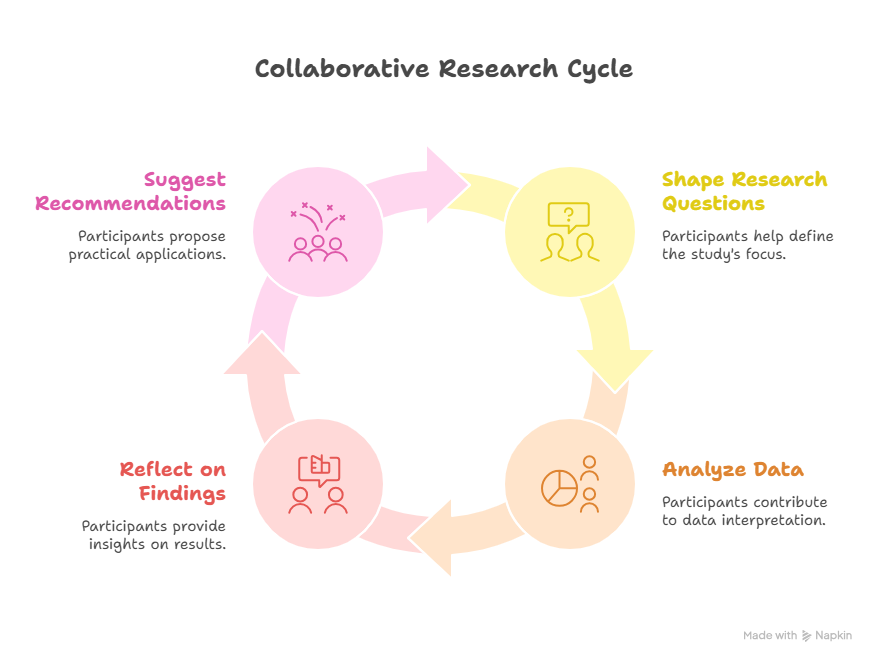
Participant collaboration goes beyond data collection. In collaborative research, participants are involved in shaping decisions throughout the study — from refining the research questions to analysing the data and reviewing the recommendations.
This can range from light-touch involvement (reviewing themes) to full co-researcher roles, as in community-based participatory research. The goal is to build trust and ensure the research genuinely reflects the realities of the people it’s about.
Participants in collaborative studies might:
- Help refine the research questions
- Join in analysing interviews, texts, or images
- Reflect on findings and suggest practical recommendations
This kind of collaboration doesn’t just improve accuracy — it also makes your research more ethical, inclusive, and grounded in real-world need.
Strategy 7 — External Audit
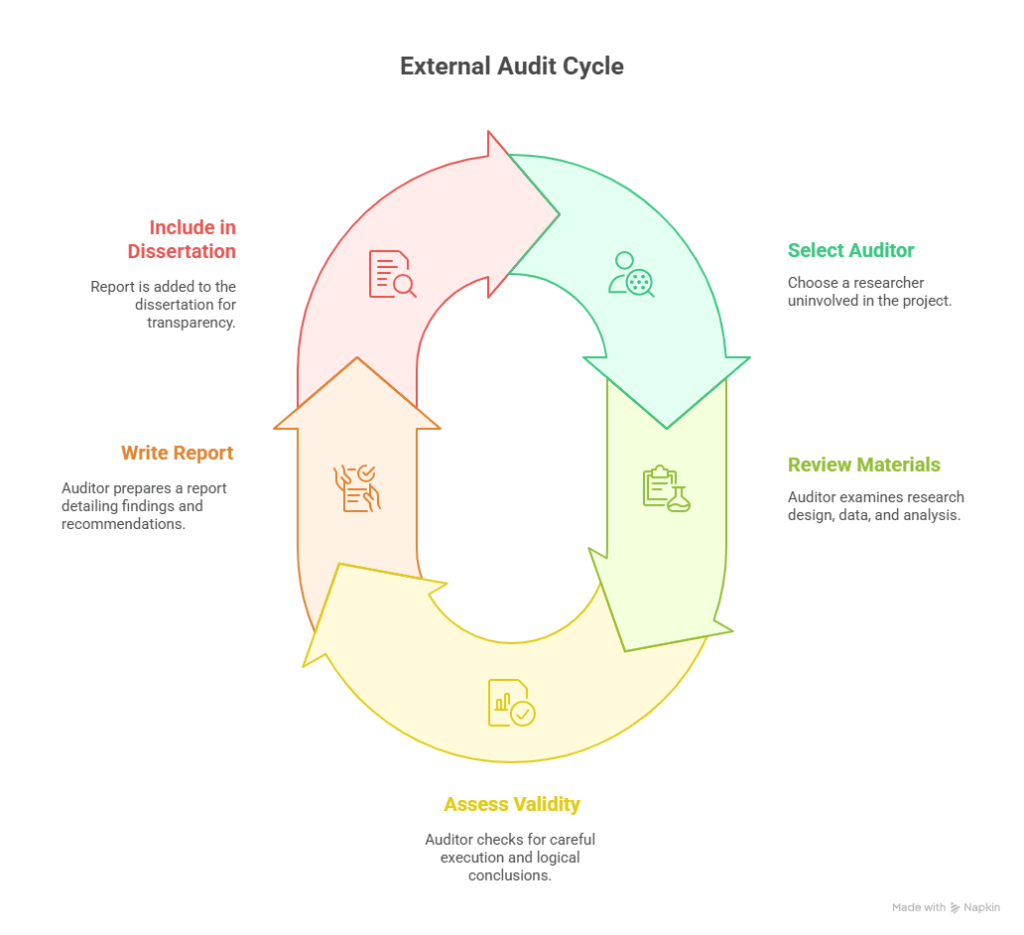
An external audit involves bringing in an independent researcher — someone not involved in your study — to review your work from the outside. They examine:
- Your final findings
- Your research design
- Your data
- Your analysis process

Their job is to check whether your study was conducted carefully and whether your conclusions are well-supported by the evidence. After their review, they write a brief audit report. In a dissertation, this is often included as an appendix — it shows your committee that your work has been independently verified.
Having someone outside the project assess your research adds a strong layer of credibility and signals that your study was conducted with integrity.
Strategy 8 — Rich Description
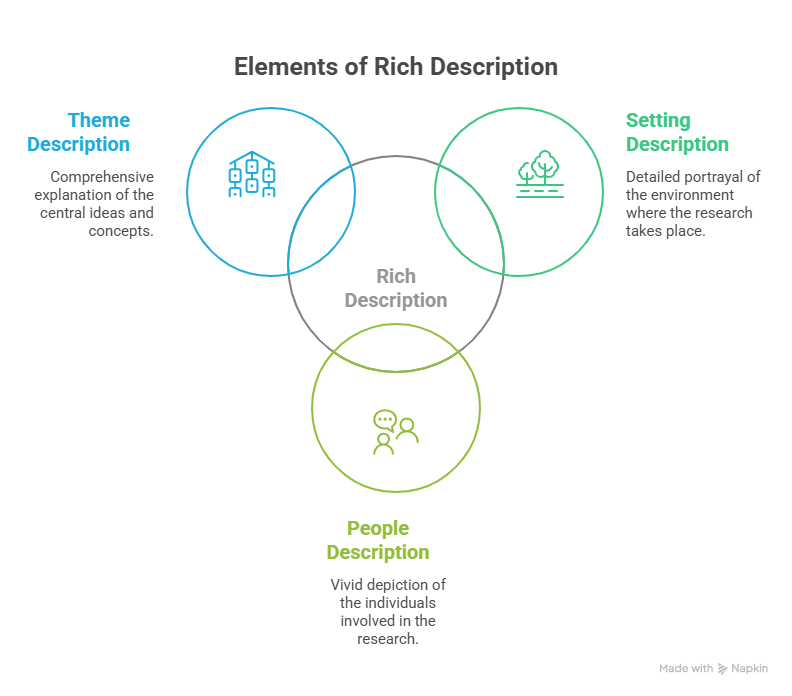
Rich description means writing detailed, vivid accounts of your setting, your participants, and your themes — in enough depth that a reader can follow your reasoning and almost picture the environment you’re describing.

This is sometimes called ‘thick description,’ a term associated with anthropologist Clifford Geertz. A strong description doesn’t just list facts — it pulls the reader into the scene. It might include a snippet of dialogue, a moment of interaction, or a clear picture of the physical or social environment where the action took place.
Rich description serves two purposes. First, it brings your findings to life and makes them meaningful to a reader. Second, it allows other researchers to assess whether your findings might be transferable to similar contexts — what Lincoln and Guba (1985) call transferability, one of the four dimensions of trustworthiness in qualitative research.
For a comprehensive introduction to trustworthiness criteria, Scribbr’s guide to validity and reliability in research offers a well-structured overview.
Strategy 9 — Peer Debriefing
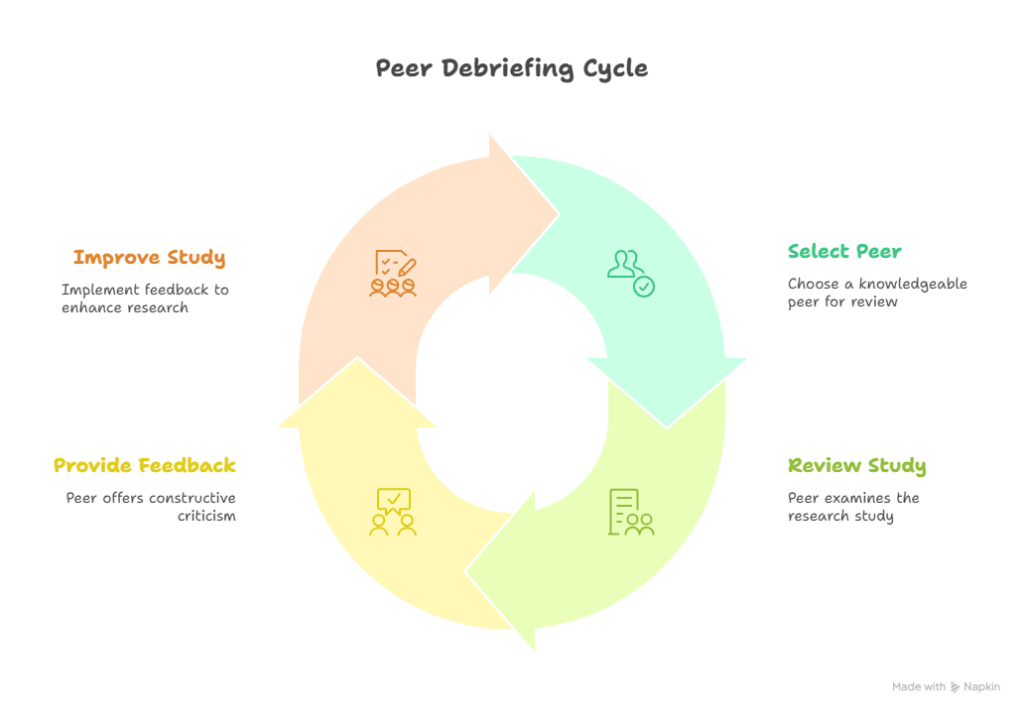
Peer debriefing means asking someone familiar with your topic — or with qualitative research in general — to review your study and give you honest feedback. Think of this person as a critical friend: they support your work, but they’re also there to challenge your thinking, ask difficult questions, and point out anything that doesn’t quite fit.

The goal is to catch blind spots and sharpen your analysis before it’s finalised. Because your peer debriefer understands the subject matter, they can offer genuinely useful insights while remaining objective.
Your peer debriefer might be a fellow PhD student, another researcher, or someone with lived experience relevant to your topic. After reviewing your work, they typically provide a brief written report covering both strengths and areas for improvement. This report can also be included in your dissertation as evidence of the steps you took to ensure quality.
Frequently Asked Questions
What is the difference between validity and reliability in qualitative research?
Reliability asks: if someone repeated this study, would they get the same results? Validity (or trustworthiness) asks: do the findings accurately reflect the participants’ experiences? In qualitative research, perfect replication isn’t the goal — rich, contextually grounded interpretation is. Lincoln and Guba (1985) proposed credibility, transferability, dependability, and confirmability as the qualitative equivalents of these concepts.
How many validity strategies do I need to use in my dissertation?
There is no fixed number, but most qualitative methodologists recommend using at least two complementary strategies. The combination you choose should reflect your research design. For example, if you’re working alone, investigator triangulation won’t apply — but reflexivity, member checking, and thick description are almost always appropriate.
Is triangulation the most important validity strategy?
Triangulation is widely cited, but it isn’t inherently superior to other strategies. What matters most is that the strategies you use are appropriate for your methodology and honestly applied. SAGE Research Methods has an excellent collection of resources that explore the full range of approaches if you want to go deeper.
What is the difference between member checking and peer debriefing?
Member checking involves going back to your research participants to verify that your interpretations reflect their experience. Peer debriefing involves consulting a colleague or other researcher — someone outside the study — to critically review your analysis and findings. Both are valuable, and they address different sources of potential bias.
Key Takeaways
Here are the nine strategies to ensure validity in qualitative research:
- Triangulation — use multiple data sources, investigators, or theoretical lenses
- Disconfirming Evidence — actively look for data that challenges your themes
- Reflexivity — document how your background and assumptions might shape interpretation
- Member Checking — share findings back with participants and invite their feedback
- Prolonged Engagement — spend sufficient time in the field to deepen understanding
- Participant Collaboration — involve participants in research decisions beyond data collection
- External Audit — have an independent researcher review your design, data, and findings
- Rich Description — write detailed, vivid accounts that support transferability
- Peer Debriefing — ask a critical friend to challenge your analysis and assumptions
Use at least two of these strategies in your study — and document each one clearly in your Methods section. That’s what turns a good qualitative analysis into a defensible one.
If you need hands-on support working through your analysis, I offer one-on-one consulting sessions for PhD students — I’ve helped over 200 researchers complete their theses using tools like NVivo, MAXQDA, and ATLAS.ti. Reach out and let’s talk.
References
Baez, J. W. (2020). 30 essential skills for the qualitative researcher. SAGE Publications.
Lincoln, Y. S., & Guba, E. G. (1985). Naturalistic inquiry. SAGE Publications.
Denzin, N. K. (1978). The research act: A theoretical introduction to sociological methods. McGraw-Hill.