

Last Updated on 5 months ago by Grace Nyambura
How to Get Themes in Qualitative Data Analysis [NVivo Guide]
In my previous articles, I showed you how to do qualitative coding — both using Qualitative Coding with Microsoft Word and using Qualitative Coding in NVivo. After coding, the next step is to move from individual codes to broader themes. That’s exactly what this article is about.
I’ll walk you through the exact process I use to get themes in qualitative data analysis, step by step, using NVivo. By the end, you’ll know how to look at your initial codes, identify patterns of shared meaning, and group them into final themes.
- How to Get Themes in Qualitative Data Analysis [NVivo Guide]
- What Are Themes in Qualitative Data Analysis?
- Where Theme Development Fits in the Braun and Clarke Framework
- My Sample Dataset
- Step by Step: How to get your themes from yours codes in N-Vivo
- The Five Themes We Identified
- Can You Get Sub-Themes?
- Frequently Asked Questions
- Key Takeaways
- Need Help With Your Qualitative Analysis?
What Are Themes in Qualitative Data Analysis?
| Definition: Themes in Qualitative ResearchA theme in qualitative data analysis is a pattern of shared meaning that emerges from grouping codes together. Themes capture a broader idea or concept that runs across multiple parts of your data. You don’t get themes directly from raw data — you get them by identifying what your codes are collectively saying. |
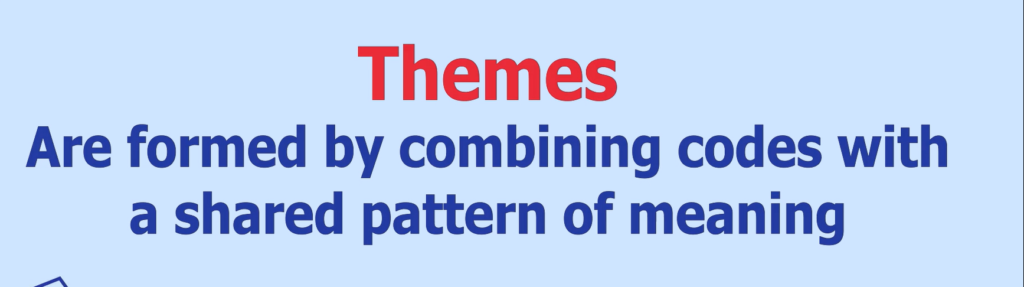
Definition of themes in qualitative data analysis – themes form when codes share a common pattern of meaning
In simple terms: codes are specific labels you attach to pieces of your data. Themes are the bigger picture those codes point to.
According to Braun and Clarke’s foundational 2006 paper on thematic analysis, a theme captures something important about the data in relation to the research question and represents a patterned response or meaning within the data. This is the framework I use in this tutorial.
Where Theme Development Fits in the Braun and Clarke Framework
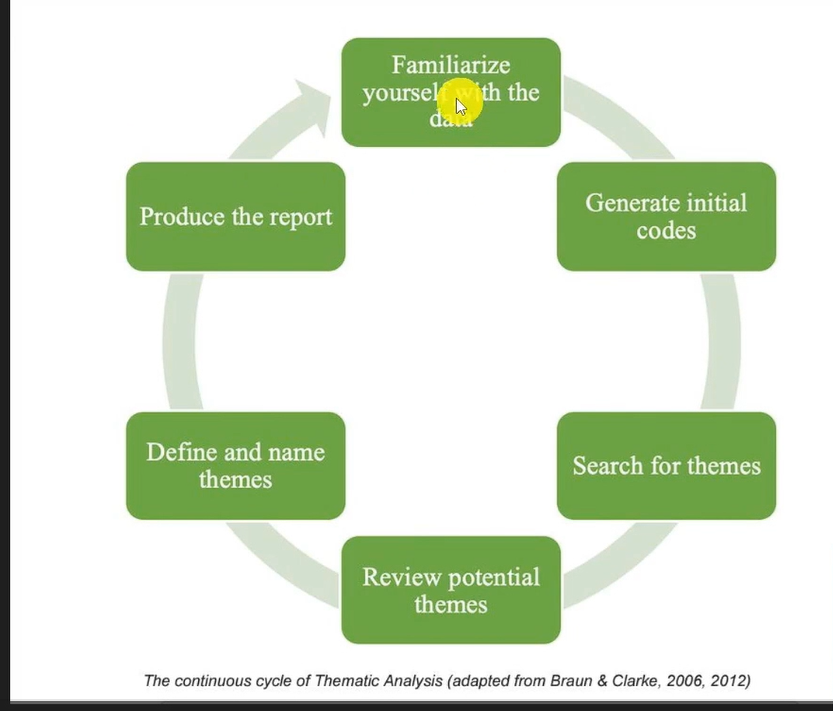
| Braun and Clarke six-step thematic analysis framework showing where theme development fits in qualitative research |
If you’re using the Braun and Clarke six-step framework for thematic analysis — one of the most widely used approaches in qualitative research — theme development is Step 3. Here’s where it fits in the full sequence:
- Familiarise yourself with the data
- Generate initial codes
- Search for themes ← this is what we’re doing in this article
- Review themes
- Define and name themes
- Write up the findings
I covered Steps 1 and 2 in my previous articles. This article picks up at Step 3. If you haven’t coded your data yet, read Qualitative Coding in NVivo before continuing.
My Sample Dataset
For this tutorial, I’m using a study on teachers’ challenges in executing alternatives to corporal punishment in secondary schools. I’ve already coded two interview transcripts in NVivo and generated a set of initial codes.
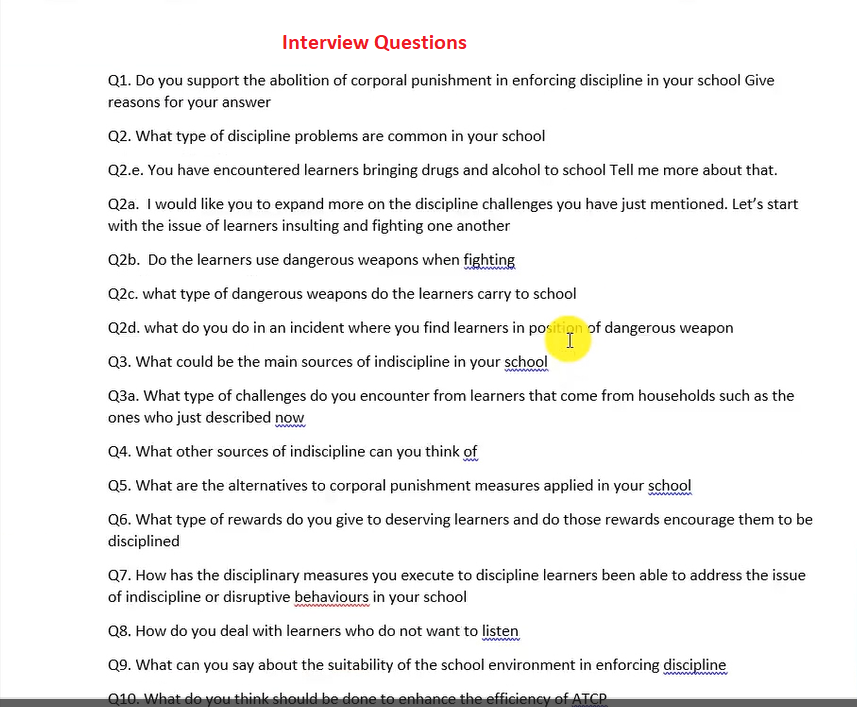
Interview questions from a qualitative study on teacher discipline in secondary schools
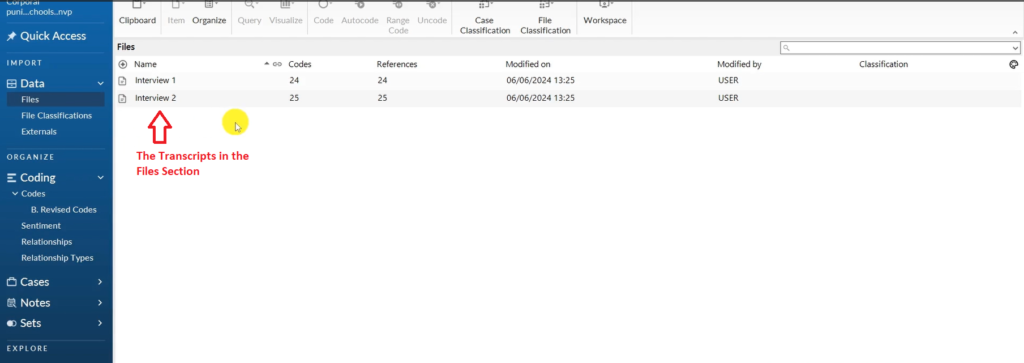
Interview transcripts in the NVivo files section ready for qualitative coding and theme development
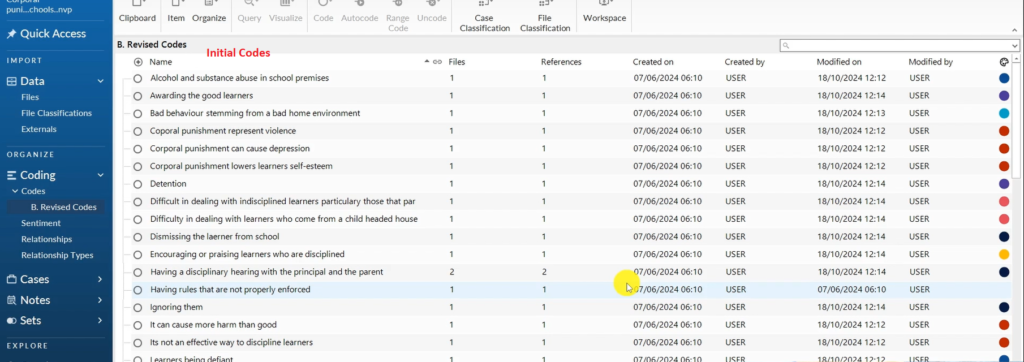
Initial codes generated from qualitative interview transcripts using thematic analysis in NVivo
Step by Step: How to get your themes from yours codes in N-Vivo
Here’s the exact process I follow to move from initial codes to final themes.
Step 1: Colour-Code Your Initial Codes by Interview Question
When I was coding, I tagged each code with a colour depending on which interview question it came from. This is a strategy I find useful for spotting patterns later when I’m searching for themes.
In this study:
- Codes from Question 1 → dark red
- Codes from Question 2 → dark blue
- Codes from Question 3 → light blue
- Codes from Question 4 → purple
- Codes from Question 5 → brown
Colour-coding by question is a strategy — not a requirement. The actual goal is always to look for a shared pattern of meaning across codes. The colours just make that process more visual.
Step 2: Create a Preliminary Themes Folder in NVivo
Go to your codes section in NVivo. Right-click in a blank area and create a new folder called Preliminary Themes. Then copy all your initial codes into this folder.
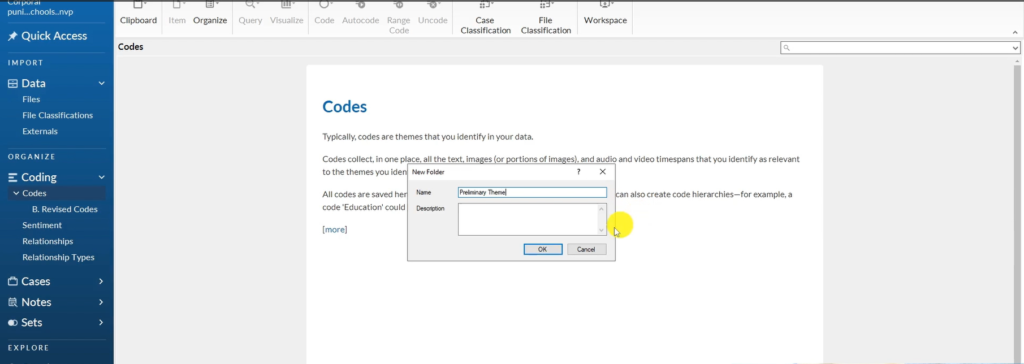
| Creating a preliminary themes folder in NVivo to organise codes before developing final themes |
Working from a separate folder means your original codes stay intact while you experiment with groupings. This is important — you want to be able to go back to your original coding structure if needed.
For a detailed overview of how NVivo organises codes and nodes, see the NVivo official documentation from Lumivero.
Step 3: Identify Patterns of Shared Meaning
Now look across your codes. Which ones are pointing to the same idea? Which ones are saying something similar, even if they use different words?
This is the core intellectual work of thematic analysis. You’re not just grouping codes that use the same word — you’re grouping codes that share a pattern of meaning.
In my dataset, I noticed that all the dark red codes related to how teachers view the effectiveness of corporal punishment. The dark blue codes all pointed to cases of indiscipline in schools. Those patterns became my first two themes.
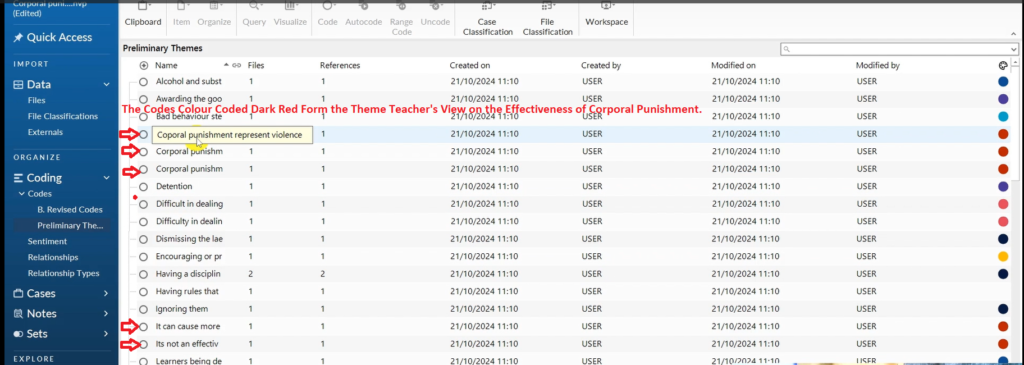
Dark red colour-coded codes in NVivo representing teachers’ views on corporal punishment effectiveness
Step 4: Name and Describe Each Theme
Once you’ve identified a pattern, right-click in a blank space in the Preliminary Themes folder and create a new node. Name it after the theme you’ve identified. Then add a brief description of what the theme represents — what shared meaning the codes in this group are expressing.
A clear description matters. When you’re writing up your findings later, you’ll return to these descriptions to explain your themes to readers.
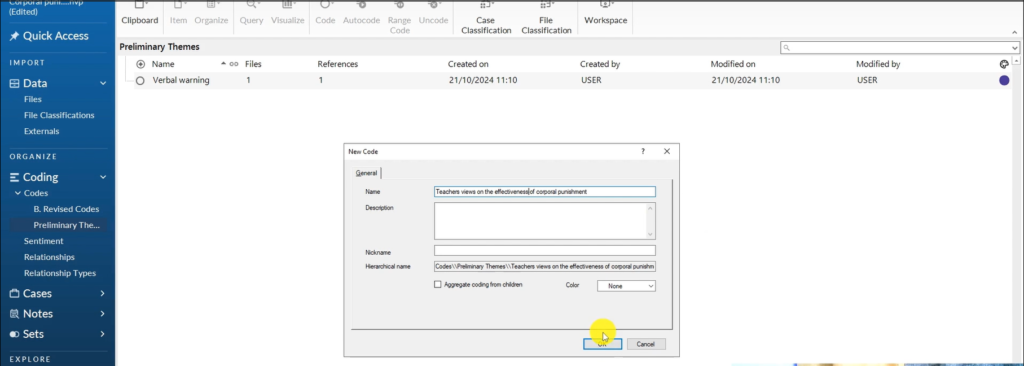
Creating the theme ‘Teachers’ Views on Corporal Punishment Effectiveness’ as a new node in NVivo
Step 5: Drag Related Codes Into Each Theme
Once you’ve named and described a theme, drag all the codes that belong to it into that theme node. This creates a nested structure in NVivo — the theme at the top, with its codes underneath.
Repeat this for every theme until all your codes have been grouped. Some codes may not fit neatly into any theme — that’s fine. You can set them aside or create a miscellaneous group to revisit later.
If you’re stuck and need hands-on help developing themes for your study, I offer one-on-one qualitative data analysis consulting sessions here.

NVivo theme node showing teachers’ views on corporal punishment with all related codes nested underneath
The Five Themes We Identified
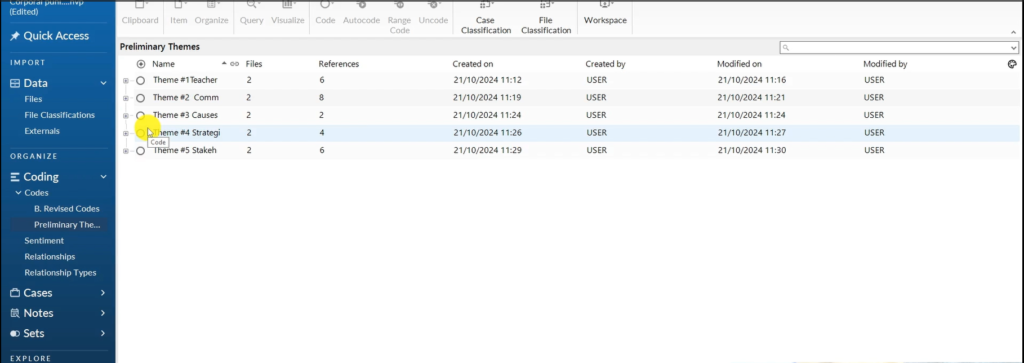
Five themes identified through thematic analysis in NVivo showing the final qualitative research findings
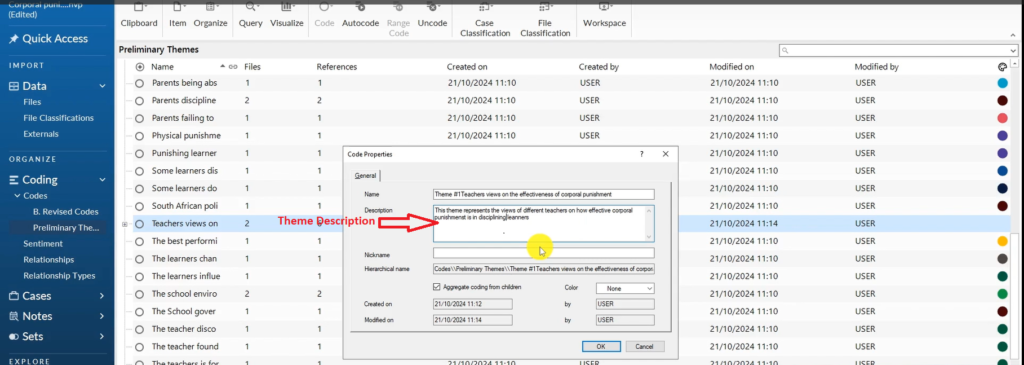
Theme description for teachers’ views on corporal punishment in NVivo showing the shared meaning of grouped codes
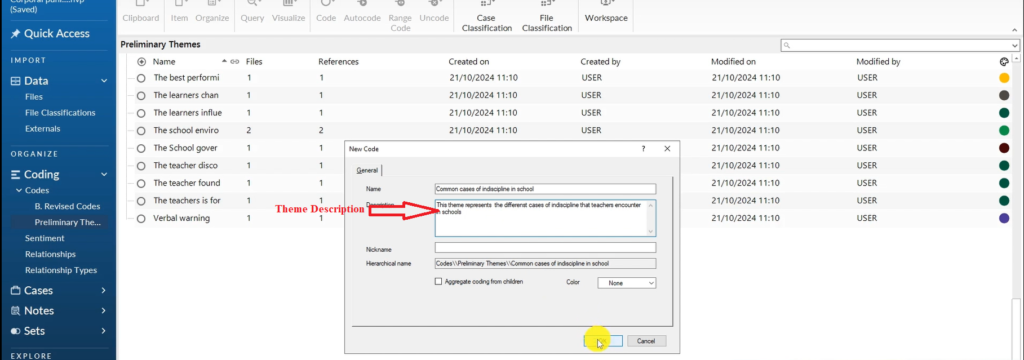
Theme description for common cases of indiscipline in NVivo showing what the grouped codes represent created from dark blue codes in NVivo thematic analysis
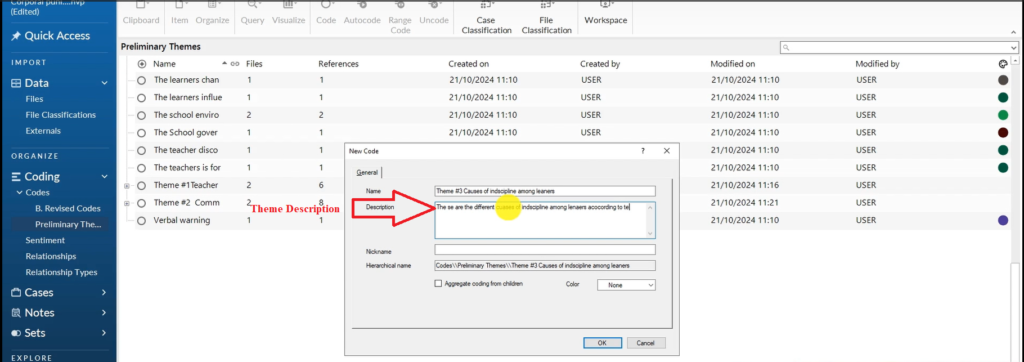
Description of the causes of indiscipline theme in NVivo describing the shared meaning across grouped codes created from light blue colour-coded codes in NVivo

Theme description in NVivo showing different strategies teachers use to discipline learners in public schools created from purple codes in NVivo
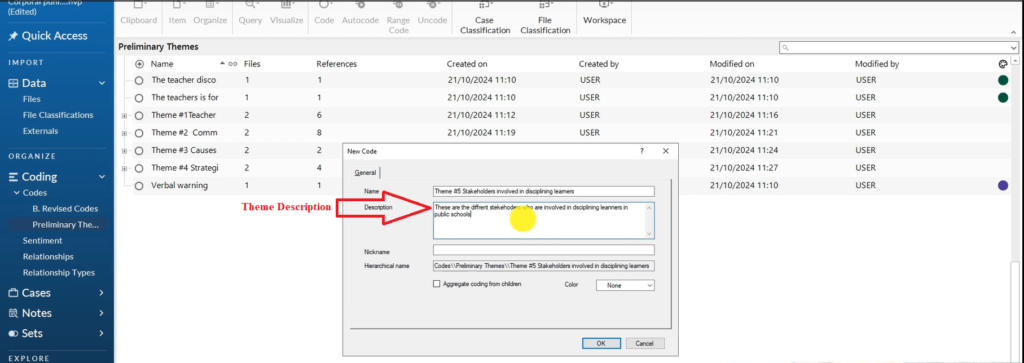
Theme description for stakeholders in NVivo showing different parties involved in school discipline created from brown colour-coded codes in NVivo
Can You Get Sub-Themes?
Yes — and this is something many researchers overlook when they’re first learning thematic analysis.
After you’ve formed your main themes, you can go deeper and create sub-themes within each one. Sub-themes are smaller, more specific patterns that sit underneath a broader theme. For example, under Causes of Indiscipline Among Learners, you might find that some codes relate to family background and others to peer influence — those could become sub-themes.
For this tutorial, I’ve focused on main themes to keep it clear. I’ll cover sub-themes in a separate article.
For a broader guide on developing your thematic analysis methodology, Scribbr’s thematic analysis guide is a solid external reference to bookmark.
Frequently Asked Questions
How many themes should I have in qualitative research?
There’s no fixed number — it depends on your data and research questions. Most qualitative studies land between 3 and 7 themes. What matters is that each theme is distinct, meaningful, and clearly supported by your data.
What’s the difference between a code and a theme?
A code is a label attached to a specific piece of data — a word, phrase, or sentence. A theme is a broader pattern that emerges when you group codes with shared meaning. Codes are granular; themes are the bigger picture.
Can I get themes without NVivo?
Yes. You can do the same process manually using a spreadsheet or sticky notes. I’ve written a step-by-step guide on qualitative coding with Microsoft Word that shows how to do this without specialist software.
Do I need to use the Braun and Clarke framework specifically?
No. It’s one of the most popular frameworks, but not the only one. Saldana’s method is another widely-used approach. I’ve covered that in my article on Inductive Thematic Analysis using NVivo (Saldana Method). What matters most is that your theme development is systematic and auditable.
Key Takeaways
- Themes come from grouping codes that share a pattern of meaning — not from reading your raw data directly
- Theme development is Step 3 of the Braun and Clarke six-step thematic analysis framework
- In NVivo, create a Preliminary Themes folder and work from there so your original codes stay intact
- Always write a description for each theme — this keeps you consistent and makes writing up your findings much easier
- Sub-themes are possible after your main themes are established — don’t feel pressured to get them in the first pass
Need Help With Your Qualitative Analysis?
If you’re stuck on getting themes — or any part of your qualitative data analysis — I offer one-on-one consulting sessions where we work through your data together. Book a session and let’s get your analysis moving.

Pingback: How to Report Findings after Performing Data Analysis with Nvivo -